We’re in the midst of November. The rains have set in, dogwood branches are bare, rose hips are visible, and walks with Tucker happen earlier now, thanks to the early sunsets and the end of daylight-saving time.
The front porches in my neighborhood are adorned with pumpkins and wreaths, and neighbors are starting to hang lights and add greenery, bringing warmth and festivity to the shorter days.
It’s my cue to give the containers by my front door a seasonal refresh, along with those that are visible from the comfort of my kitchen and living room. These are the containers I see most, so they get the seasonal upgrade first.
November is a good time for this. It’s not too late, the holidays haven’t swallowed my time up yet, and when the rain stops, the afternoon light is low and golden. Absolutely beautiful.
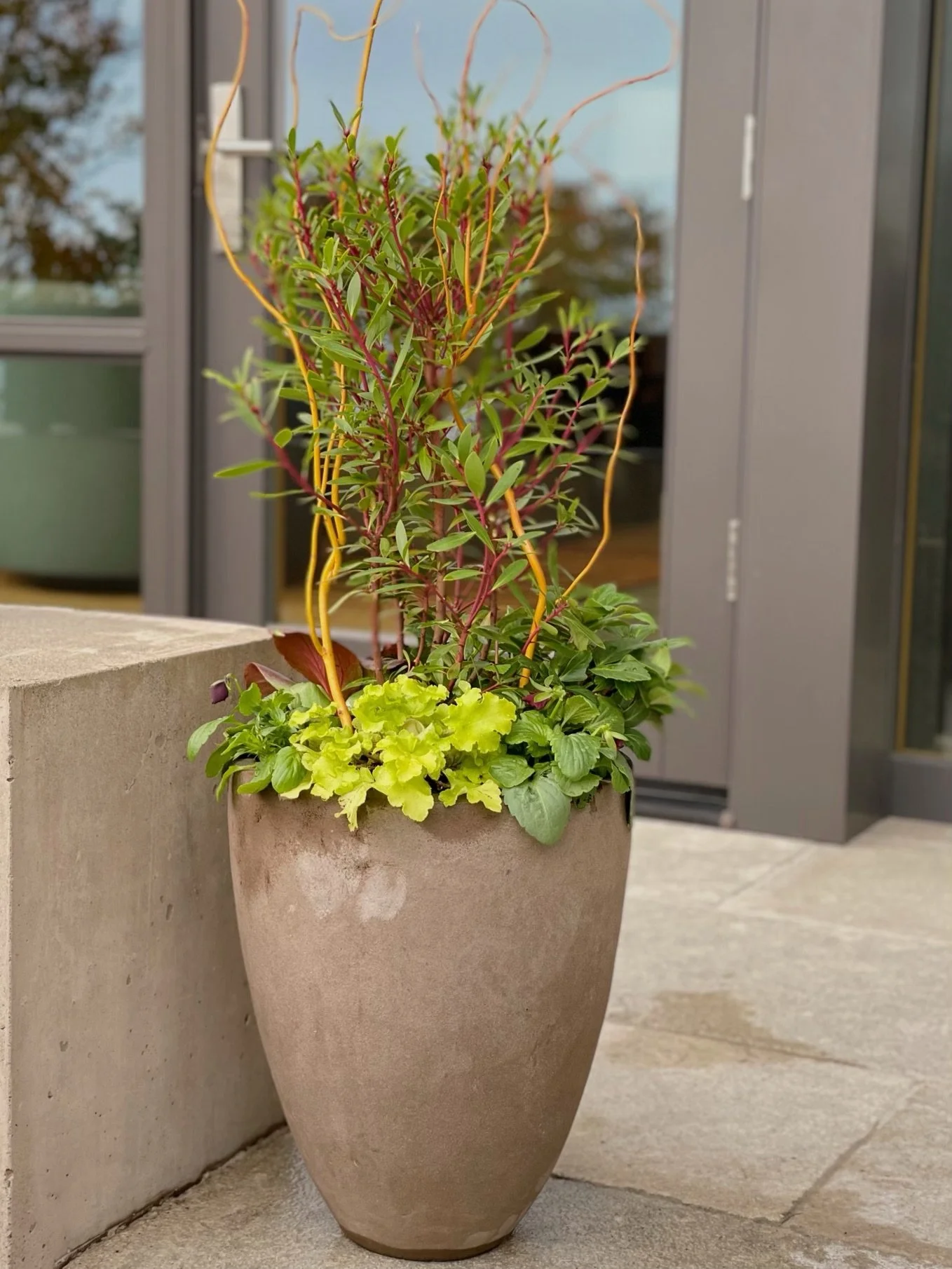
Golden curly willow stems add structure and contrast to the red stems of the Drimys lanceolata.
First, a thriller that can handle winter
You'll approach your container plantings differently at this time of year depending on where you garden. Here in the Pacific Northwest, our winters are mild, so containers planted in fall can carry us through winter and well into spring, even as far as May if plants are well chosen. An evergreen focal plant gives the planting structure and provides a foundation for the additional elements that add seasonal touches.
If you already have a healthy evergreen anchoring your planting, great! A few branches, some seasonal color, or a little holiday bling may be all it needs for a refresh.
Tasmanian mountain pepper (Tasmannian lanceolata, also known as Drimys lanceolata) Glossy leaves and striking red stems are what helps this shrub to earn it’s keep in the winter. Creamy, lightly honey scented flowers follow in the spring. Hardy to Zone 7.
'Wilma Goldcrest' Monterey cypress (Cupressus ‘Wilma Goldcrest) This columnar golden yellow dwarf evergreen brightens the grayest of days and carries a distinct lemon fragrance when its foliage is brushed or crushed. Hardy to Zone 7.
Ilex varieties like 'Little Rascal' or 'Sky Pencil'. One is tidy and mound-like in habit, while the other is tall and slim like an exclamation point. I like these for their shape. Both being cold hardy to zone 5.
The wonderful part about these choices is that none are one-season wonders, and you can choose to leave them in your container or transplant them into your garden when spring arrives.
Unless you garden where winter is biting. In that case, the winters can be so cold that live evergreen shrubs may not survive, so cut spruce tops could step in as a thriller. Cut branches, cedar boughs or an evergreen garland, can work too.
For more ideas, Lorene Edwards Forkner shares several of my favorites in this Seattle Times article about plants for fall containers.
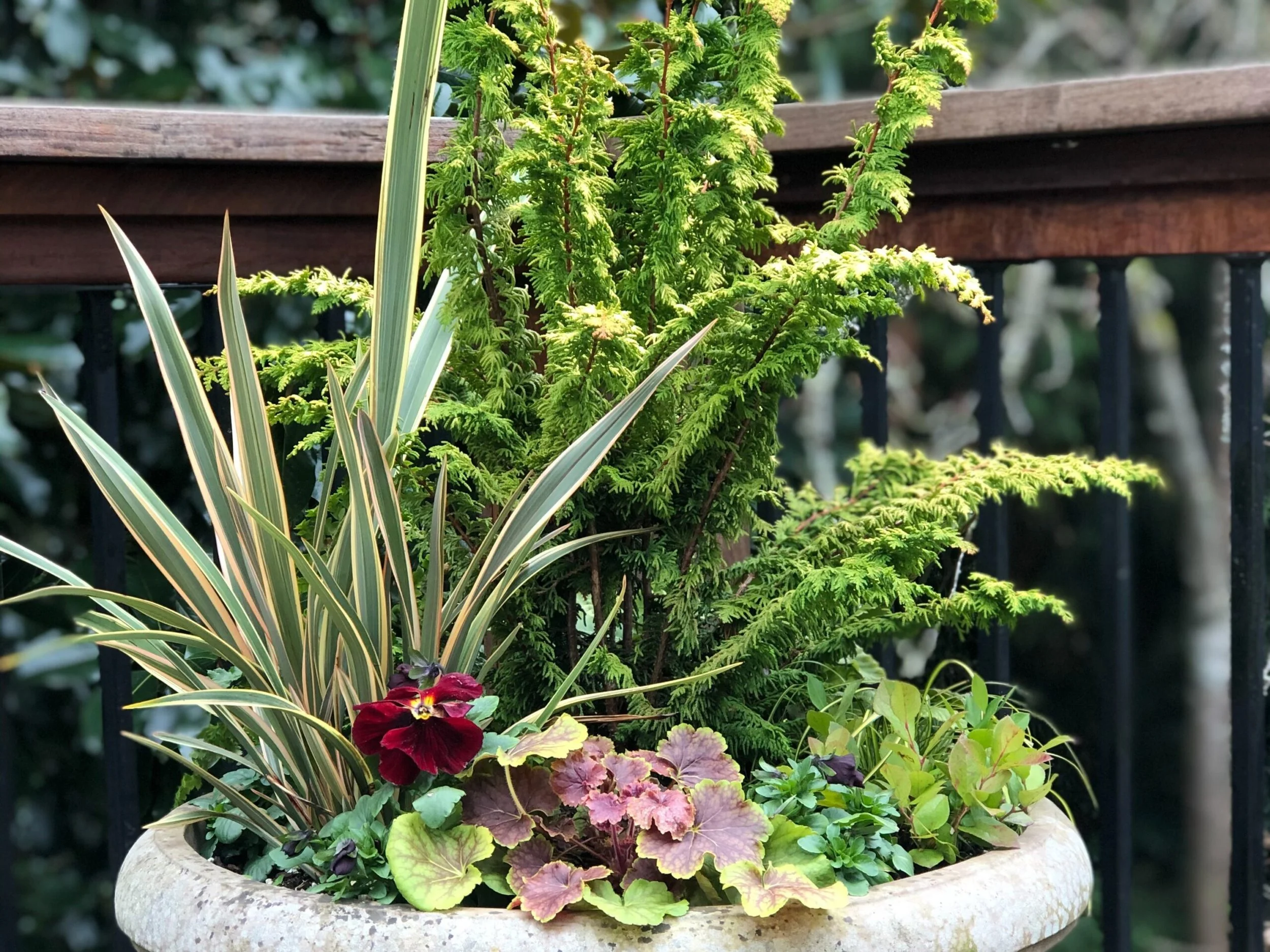
A thriller sets the tone, and everything tucked around take its cue.
Regardless of where you live, there are a number of ways to embellish your container plantings this month, to make them feel warm and welcoming for the holiday season, ranging from the sparkly to the more natural.
Repeat yourself (on purpose)
Before you start poking things into a pot, choose a color theme, pick two or three colors and plan to repeat them through the planting. Those red stems on the Drimys? Bring the brick color back with winterberry, Red Blotch pansies, or even an ornament or two. Repeat the straw-colored tones of aged curly willow branches with Heuchera ‘Marmalade’. When a color shows up in a few places, the design looks curated and intentional. Skip this, and it can feel busy and chaotic instead.
Let’s talk branches
One of the easiest ways to get height, texture and color is with branches. Curly willow, ‘Red Twig’ and ‘Midwinter Fire’ dogwood are all interesting and excellent choices. Tuck them beneath, through or behind your thriller, and they erupt, light and airy, so the planting has movement and never feels heavy. ‘Midwinter Fire’ dogwood is a fun one to play with. The stems glow goldenrod yellow to golden orange, then shift to a fire engine red toward the tips. If you have dogwood, curly willow, contorted filbert or other interesting branches in your own yard, you may already have free décor waiting to be gathered. Part of the fun is the hunt itself.
Pro-Tip: Push the stems in at different depths and angles and let one or two hang out over the edge of the pot. They’ll look more natural almost as though they grew there.
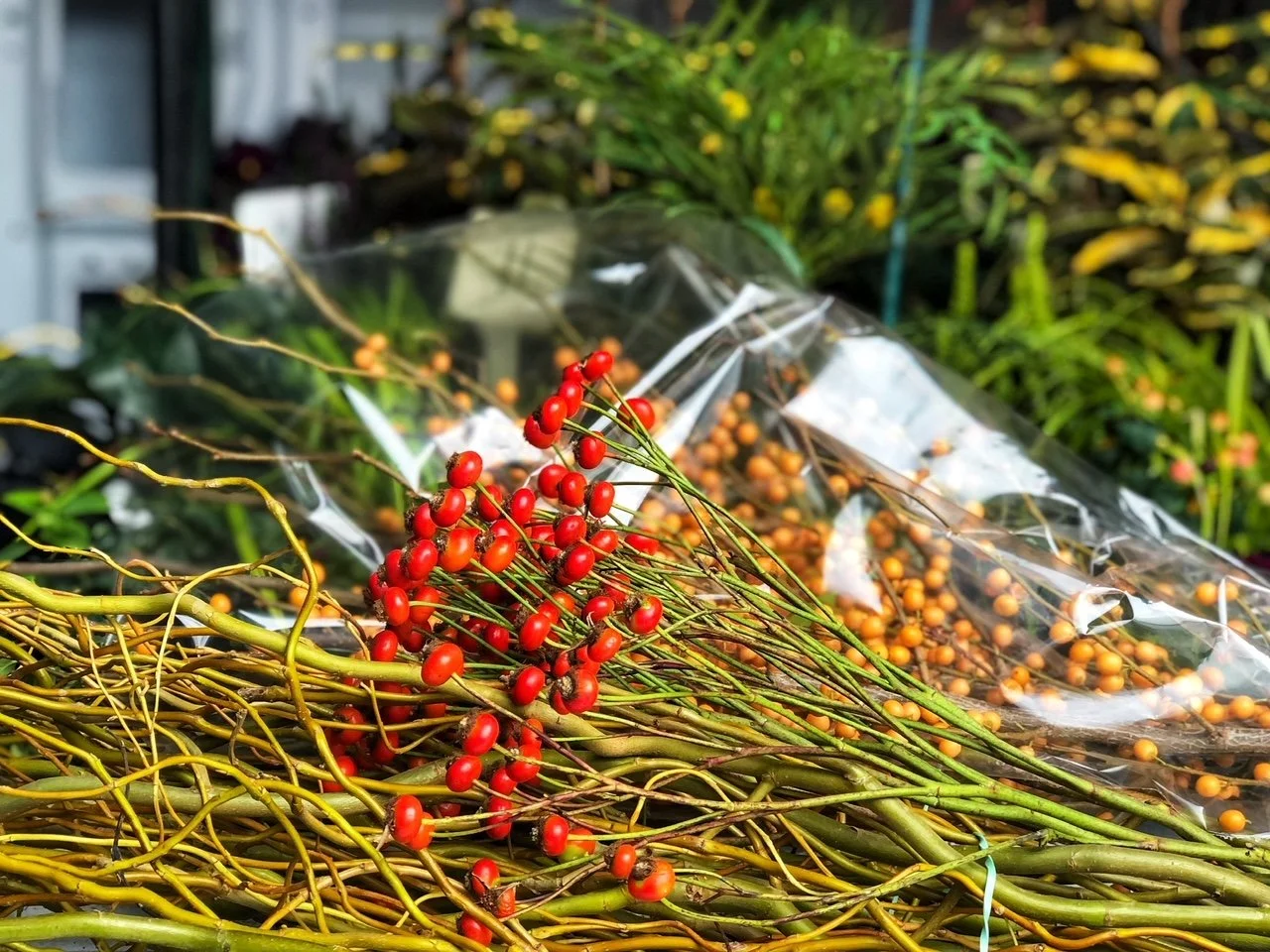
Curly willow, rose hips, and ilex berries can add height, texture and color to a planting.
Gather neutral elements for texture
Some of my favorite fillers for adding texture for the season are pinecones, berries, and dried bits like globe thistle. Pair them with deciduous branches and balls of woven grapevine, and you not only have a fun texture but a quiet elegance in a neutral color palette.
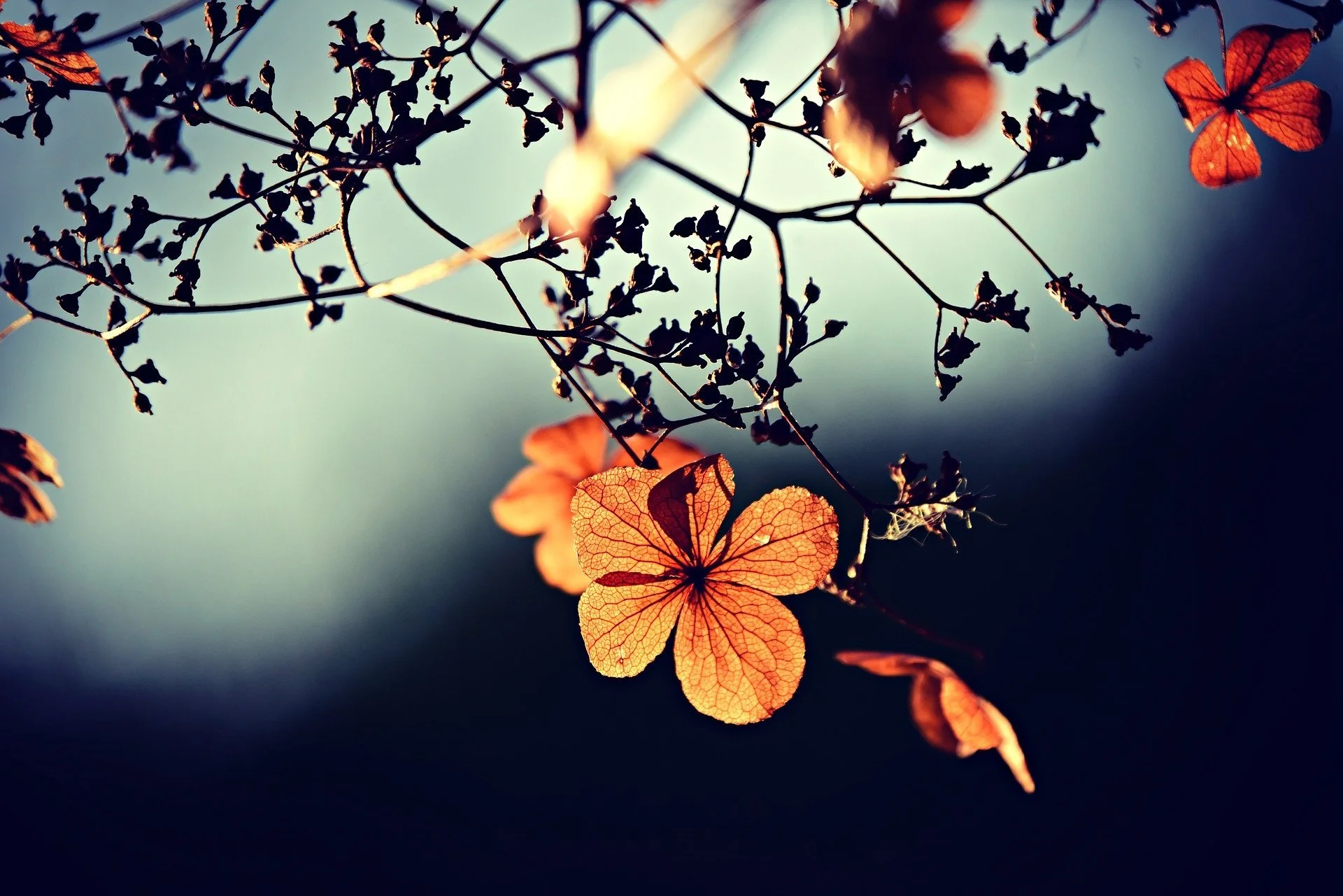
Dried hydrangeas are another wonderful accent when placed in the right planter! If your container is protected from the wet (think covered porch or under an eave), a few dried blooms add soft, papery fullness in dusky, muted tones that look lovely next to evergreens and dark berries.
Protected is the key word, though. Rain and wind aren’t kind to them. If your pot sits out in the open, I’d skip the hydrangeas and stick with branches and cones.
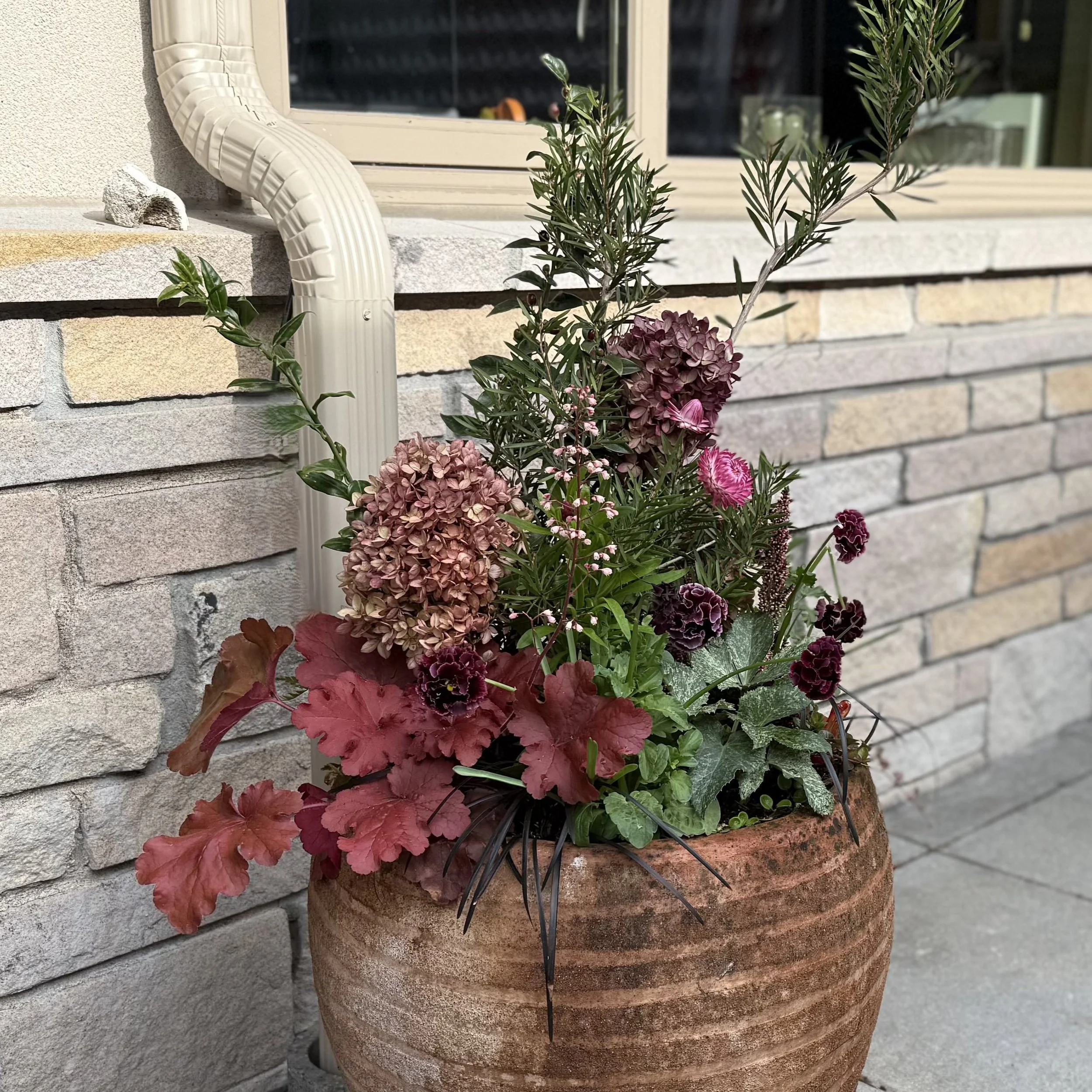
Dried hydrangeas bring muted parchment tones to a container that stays out of the rain.
Berries: tuck them in or plant them
Berries are another excellent way to add interest to your planting. Cut branches of Callicarpa 'Pearl Glam', with its effervescent purple berries, winterberry, with its bright red berries, and orange-tinted rose hips, all offer bright, eye-catching pops of color at this time of year.
Then there are also the plants that bring their own berries, no tucking in required.
Sarcococca is a lovely choice for shade, fragrance and berries. Mahonia ‘Soft Caress’ with its bright canary yellow flowers in bloom now, later followed by the blue berries birds love. Gaultheria procumbens, or wintergreen, hugs the base of a planting, with bright red berries and leaves that deepen to burgundy in the cold. Crush a leaf, and it smells like wintergreen! And then there’s my new favorite, Iochroma cyaneum ‘Burgundy Wine’. It’s a tender wild card and can get quite large; however, it’s cranberry-colored tubular flowers that hummingbirds adore, and berries have me swooning currently. It needs protection here once the frost comes.
And don’t forget ornaments, either. Just a few colorful ornaments can reflect light, add shimmer and sparkle to a planting. This type of bling can be a wonderful opportunity to be creative and play.
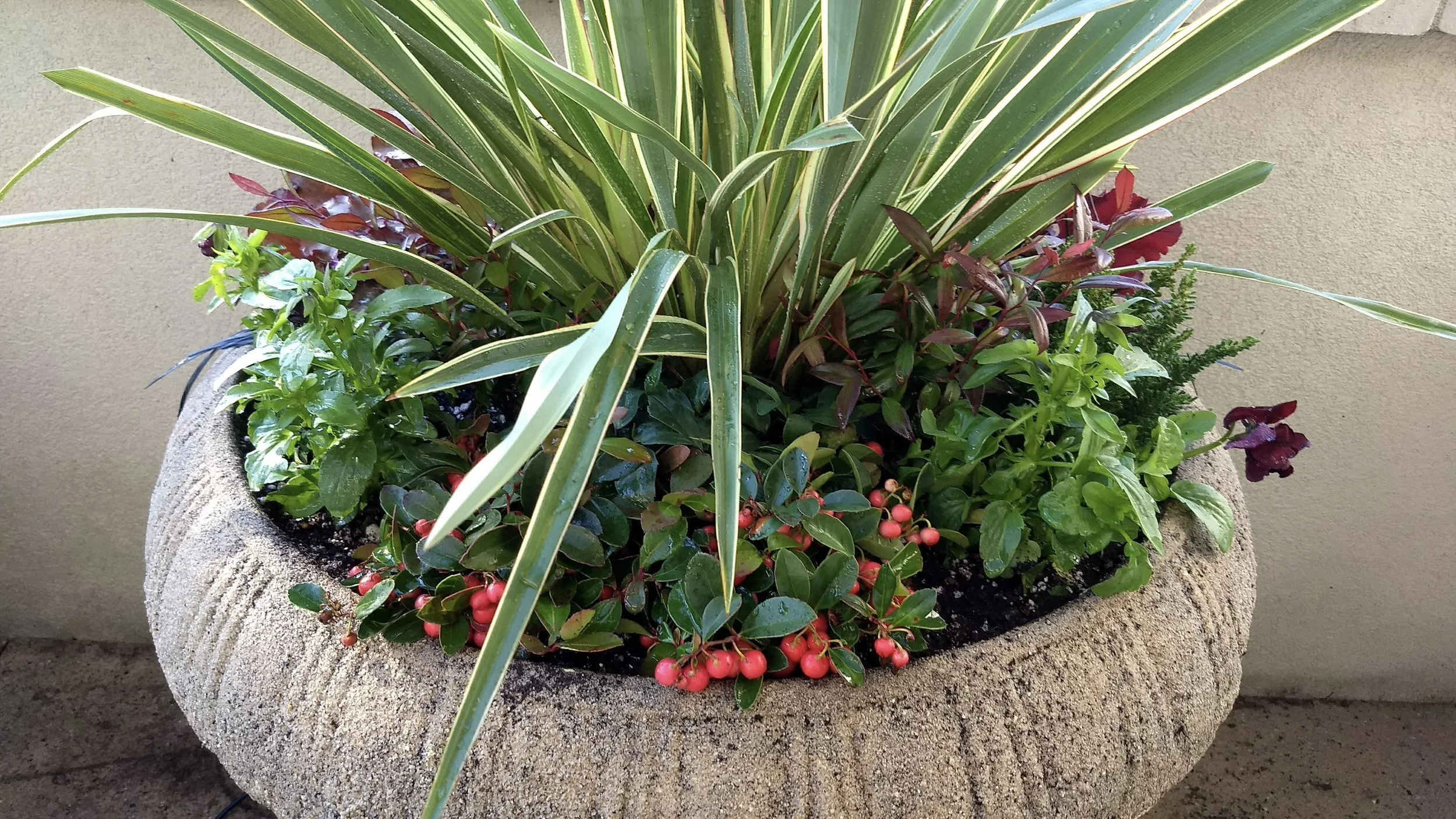
Plants that carry their own berries like Gaultheria procumbens do the decorating for you.
Faux touches for tricky spots
Faux plant material can be a handy accessory for adding color and texture, with no worrying about a freeze. The quality can be so good these days that when tucked in with live plants, it fools even the most discerning eye. There are a plethora of options in the faux arena, including berry sprigs, pinecones, and evergreen stems. I like using them in deep shady spots, where flowering plants cant struggle to bloom, and a convincing faux hellebore can brighten those spots nicely.
I've also been known to paint dried eucalyptus pods red and tucked them in for a whimsical burst of color at this time of year.
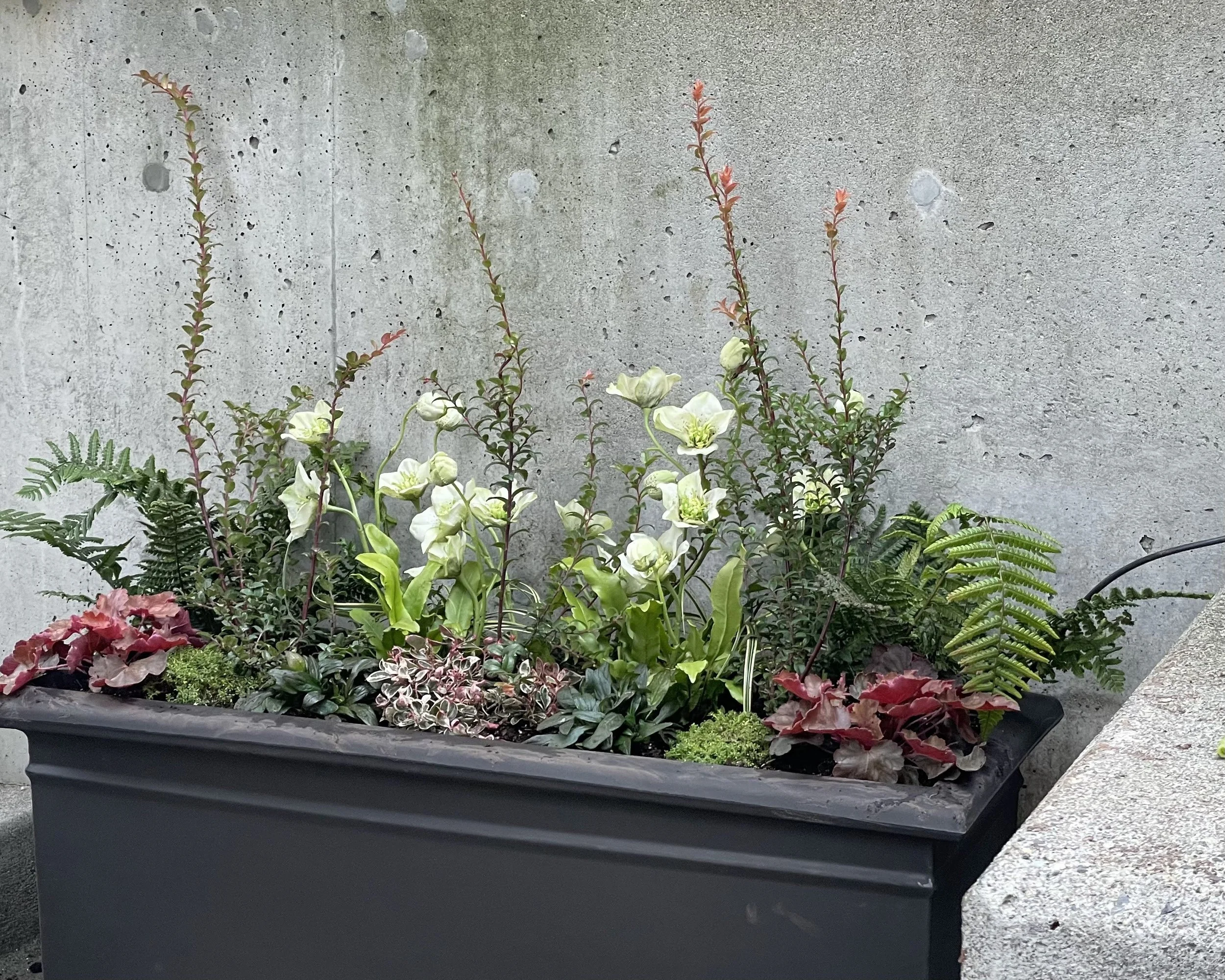
Faux hellebores brighten a shady corner where little else would bloom.
Finish with a little twinkle
Light brings a festiveness to a holiday display. Now that it’s dark by late afternoon, a glow by the front door feels especially welcoming. Stringing outdoor-rated twinkle lights through your focal evergreen or bare branches or loosely bunching a strand together and tucking it into the center of your arrangement are all nice touches and add a touch of sophistication.
Once the holidays are over, you can remove the "bling" and let your evergreens and winter color take over until your spring-blooming bulbs start poking up in February.

Where to find more inspiration
Deborah Silver of Detroit Garden Works and Howard Nemeroff of Plant Parenting are both people I follow for winter container inspiration. Their installations are contemporary, creative and as much about art as they are about nature. I’m always finding something to admire.
If all of this feels a bit overwhelming, start with just one thing, step back, and see if it makes you smile. If it does, then you might add another, or decide that’s all the planting needs.
Look for inspiration, think a little magical. Just a few festive touches can bring warmth and charm to your outdoor spaces, spreading a little joy and cheer to a neighbor walking by and to you, every time you come home.
Happy Container Gardening!