Why I Love Designing with Aeoniums in Containers
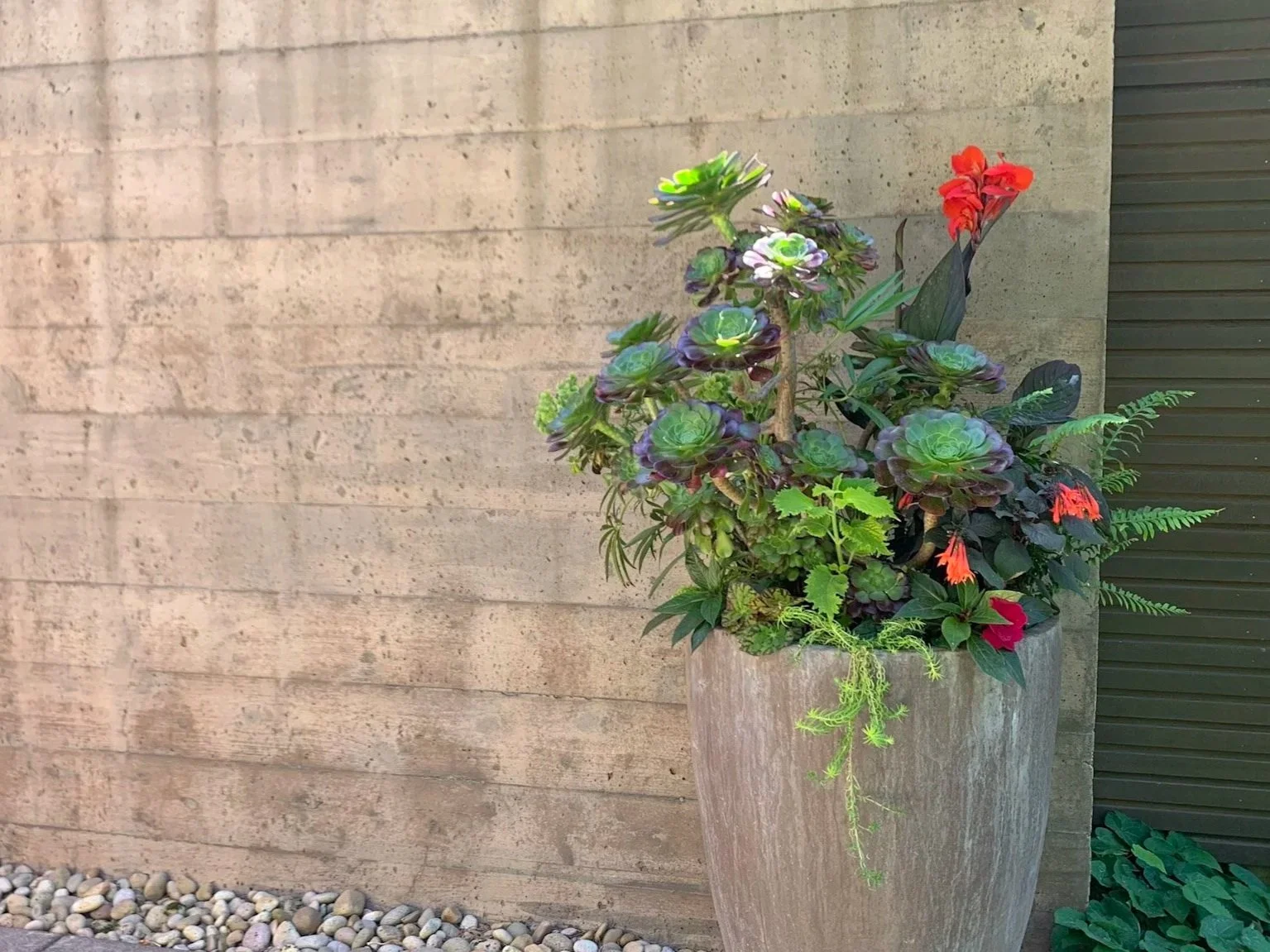
Those that know me know that aeoniums often have a starring role in my container designs. In fact, whenever the situation allows it, I’ll find a way to tuck one or two into a container planting. I am absolutely crazy about them!
Some of that obsession might trace back to my Northern California roots. I’m drawn to succulents, their toughness and simplicity. But even growing up in California, I wasn’t fully aware of their gift. It wasn’t until I was a student in the Lake Washington Horticulture program, growing aeoniums and then working side by side with the talented Tina Dixon, keenly watching how she wove them through her container designs, that I truly recognized their beauty and potential.
What sets them apart?
Here’s the thing about aeoniums. They don’t just fill a container; they take the stage in it. While many succulents ask to be appreciated up close, aeoniums don’t need that kind of coaxing. They’re the kind of plant you notice from across the patio. Their tree-like growth habit, with branching stems topped by clusters of symmetrically arranged, lush, waxy rosettes, gives them a bonsai-like elegance and a bold, unmistakable presence. They offer wonderful texture, depth, and sculptural form to a planting. They also have a bit of a Jurassic park vibe that brings a playful whimsy quality to the mix. Pot one up, and you haven’t just added a plant to your container. You’ve added a dramatic piece of living sculpture.
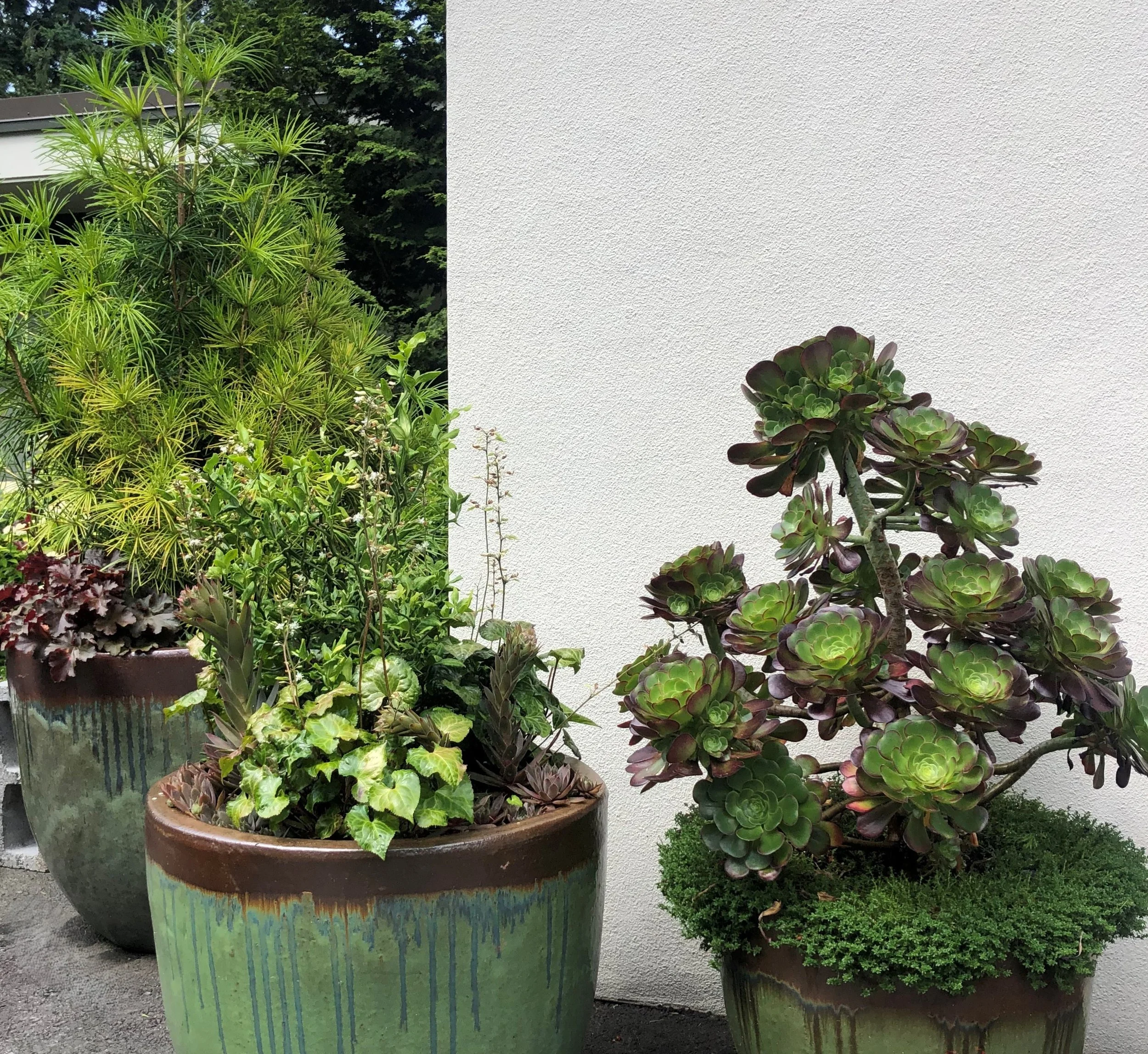
They can also be great dance partners, pairing beautifully with other plants, or stand on their own as a superstar specimen and be a great conversation starter. Their shallow root systems make them especially well-suited for pots. They’re perfectly happy in tight root spaces as long as the soil drains well. In fact, in their native environment they happily grow in rock crevices. They also won’t typically outgrow a pot for years the way some other focal plants will.
Then there’s the foliage itself. Their glossy, waxy leaves stacked in perfect spirals offer a pattern and sheen different from other plants that beautifully catches and bounces the light. In fact, the shiny rosette structure can be so lovely and perfect that I’ve had more than one client ask whether the plant is real.
And the color range is fantastic! From lime green to burnished bronze, deep burgundy, and near black. The darker varieties add moody tones that make the greens around them pop. While others like ‘Kiwi’ or ‘Sunburst’ with multicolored leaves that radiate in stripes of cream, chartreuse, and pink, bring all kinds of opportunities for color echo in a planting.
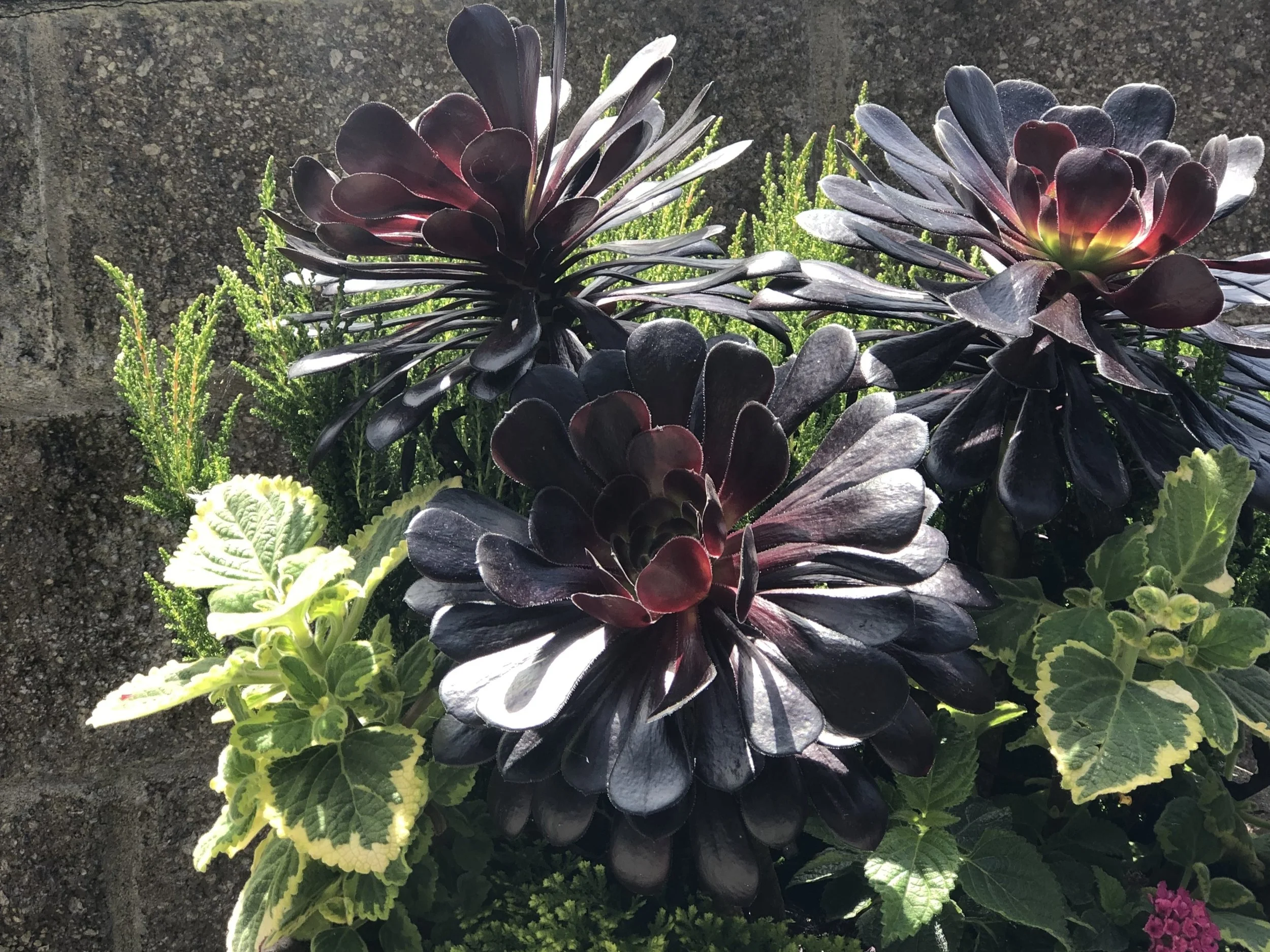
That’s all part of what makes aeoniums so versatile as a design tool. Depending on the variety, an aeonium can anchor a planting, provide color repetition that helps tie the arrangement together, or add quiet textural interest. Same plant, wildly different jobs. That flexibility and wow factor is why I reach for them so often.
Designing with Aeoniums
This is the fun part, and the things I think about when designing with aeoniums.
Solo star or team player?
An aeonium with a long, single curved stem and one or more large heads, like ‘Cyclops’ or ‘Zwarkopf’ can be statuesque, dramatic and conversation starting. It can be pure flair and swagger standing alone as a specimen plant or simply underplanted. Or the same aeonium can be mixed with other plants in a container and be just as happy as a team player. Pair it with softer textures and you get not only a lovely contrast in texture between the aeonium’s rigid form and the movement around it but can also hide the stems and create a lush, layered look. Pennisetum setaceum ‘Rubrum’ and Gaura ‘Graceful White’ are two of my favorites for this. Their airy foliage softens the woody stems, while the aeonium’s bold shape helps grass-like textures read less wild and a bit more refined.
Color echo: echo the color, don’t just match it.
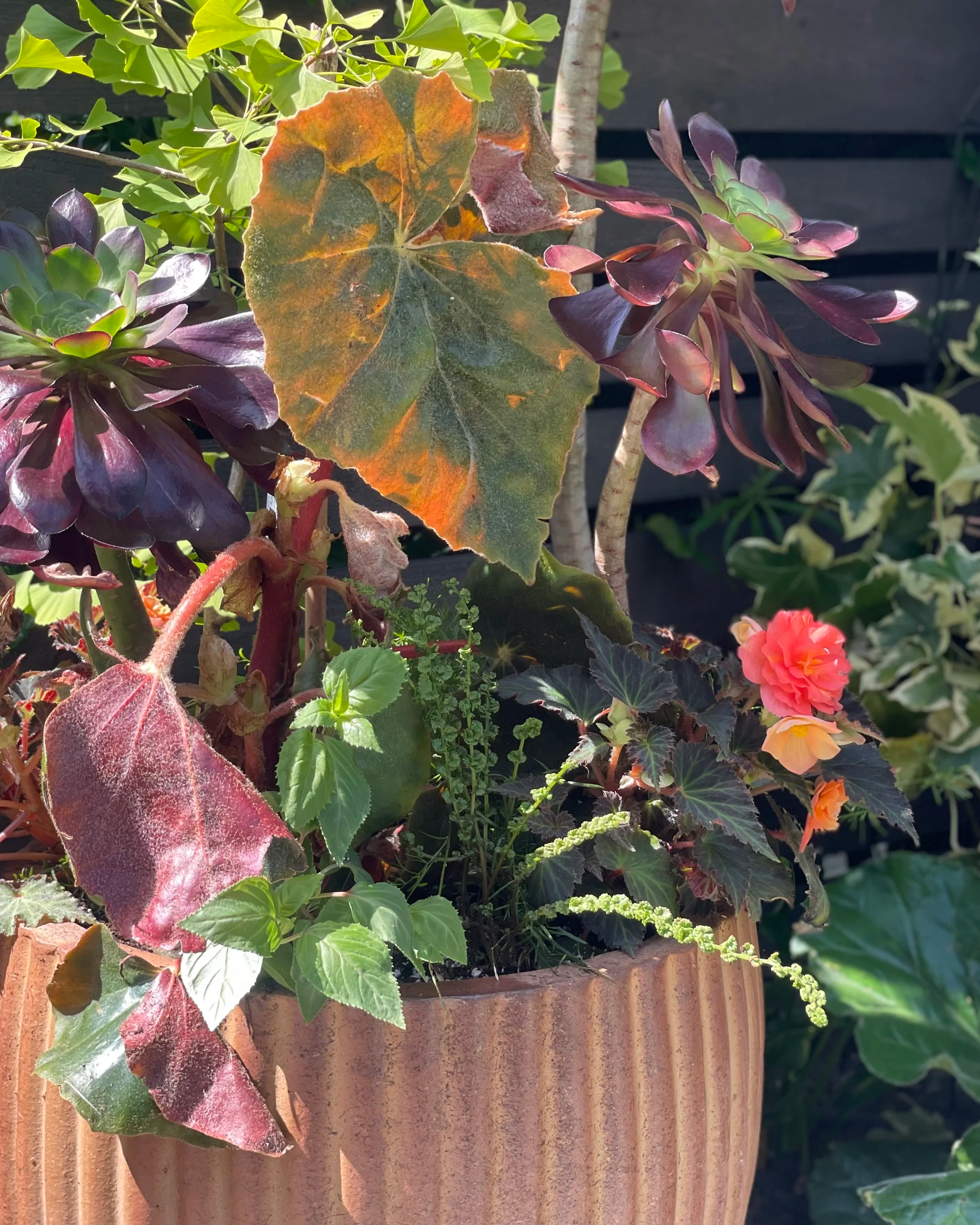
When I’m working with darker varieties like Cyclops, Zwartkop, or Atropurpureum, I look to add something else in the planting that repeats that same deep, rich color in a different shape or texture. With Zwartkop, for example, I might add black mondo grass or a dark coleus to repeat that same burgundy, black tone. With Atropurpureum, and its reddish tones, I enjoy adding red blooming flowers like geraniums or begonia. Or with Sunburst, I might weave in a soft pink-colored flower, or a blue-green foliage companion.
Echoing the color elsewhere ties the whole planting together in a way that feels intentional and well designed. I use this trick often, and not just with aeoniums, but they make it especially easy because their color is so saturated and consistent.
Use contrast to create drama
Aeoniums also give you great opportunities for contrast, not only through color but also through texture. Pair a near black variety like ‘Black Rose’ with a chartreuse Ipomoea or Sedum ‘Angelina’ and you get instant attitude and drama! This works really well when you want a bold statement or are creating a more modern or minimal design. The combination is simple and elegant.
Aeoniums have smooth, glossy spoon-shaped leaves. Contrast them with highly textured foliage, like the palmate, matte leaves of a geranium, the fuzzy leaves of Begonia ‘Gene Daniels’, or the narrow leaves of a Fuchsia ‘Autumnale’ and you’ll have differences in textures that create visual depth.
Give the stems some breathing room
As aeoniums grow, their older leaves naturally drop off, leaving scars along the stem that contribute to their bonsai-like appearance. Some plantings benefit from negatives space to help balance the composition. A long, curved, bare, woody stem topped with a rosette gives you both structure and open-space, allowing the planting a little room to breathe.
Think about height and habit
If you design containers using the thriller-filler-spiller method, an upright, multibranched Aeonium arboreum can be a natural thriller. It gives you vertical interest without a lot of bulk and provides plenty of structure. Whereas a lower growing, multi-branching aeonium like ‘Kiwi’ can work beautifully as a filler, adding texture and color to the mid-layer of a planting.
One more thing… you can easily prune aeoniums back to keep the shape or height you want, if the shape gets awkward or a stem gets too leggy. You can cut into the stem, and the plant will branch out below the cut, giving you a fuller, more compact shape, and you’ve given yourself a beautiful rosette cutting to work with. We’ll get back to that.
One plant, lots of ways to use it
Another thing I love about aeoniums is how far they reach across various design styles. In a modern or minimalistic setting, a single-stemmed variety clustered together can create a striking arrangement in a clean-lined pot, with nothing or little competing for attention beyond a contrasting groundcover.
In a Mediterranean style garden, plant them with other drought tolerant, sun-loving plants like lavender, santolina, or a silvery artemisia, and the entire planting feels sundrenched and connected, because culturally, it is.
And in a looser, cottage-style container planting, I’ll let the aeonium be the unexpected structural element among softer, more traditional plants, with texture and color pulling the plants into one communal conversation.
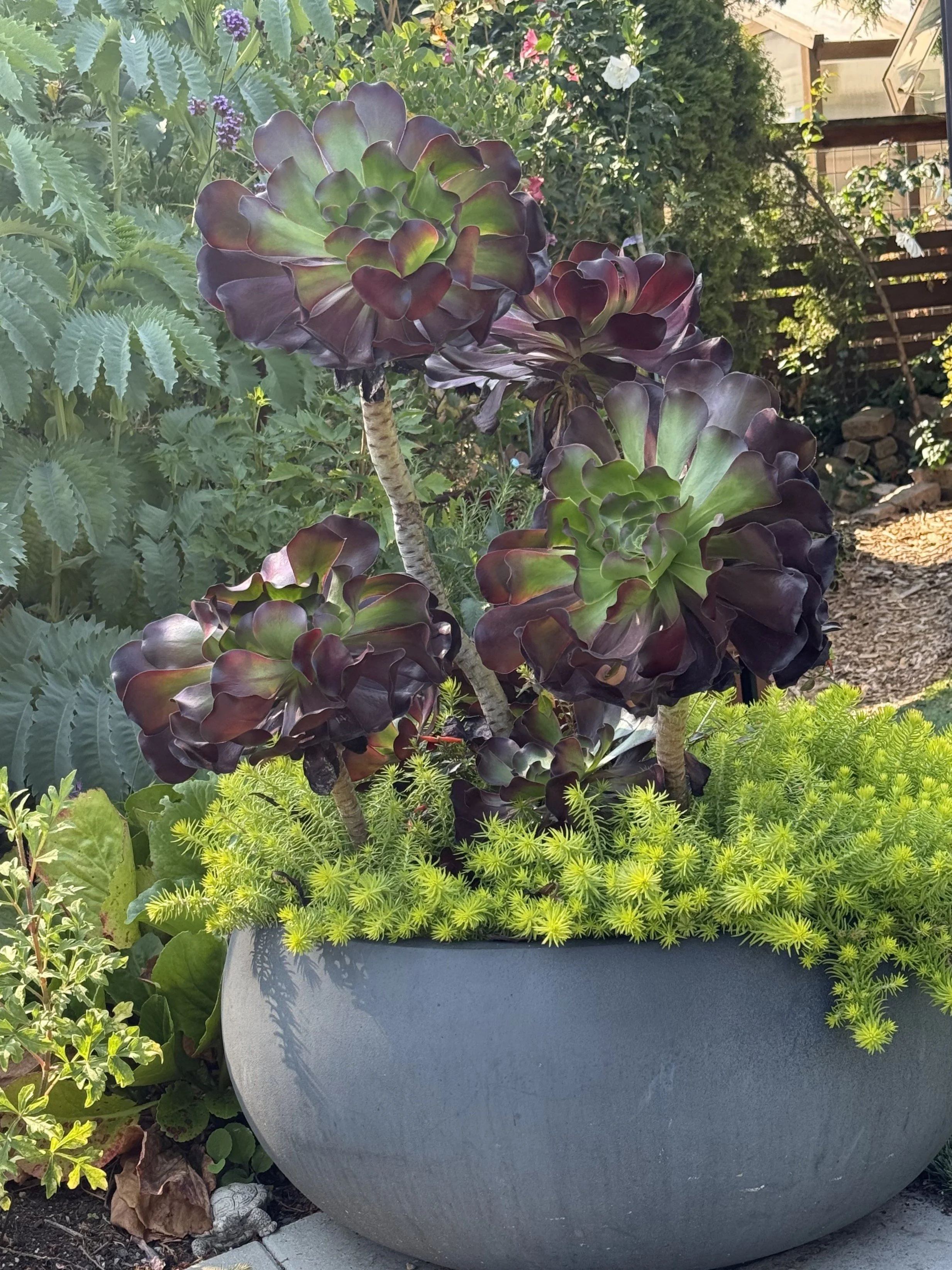
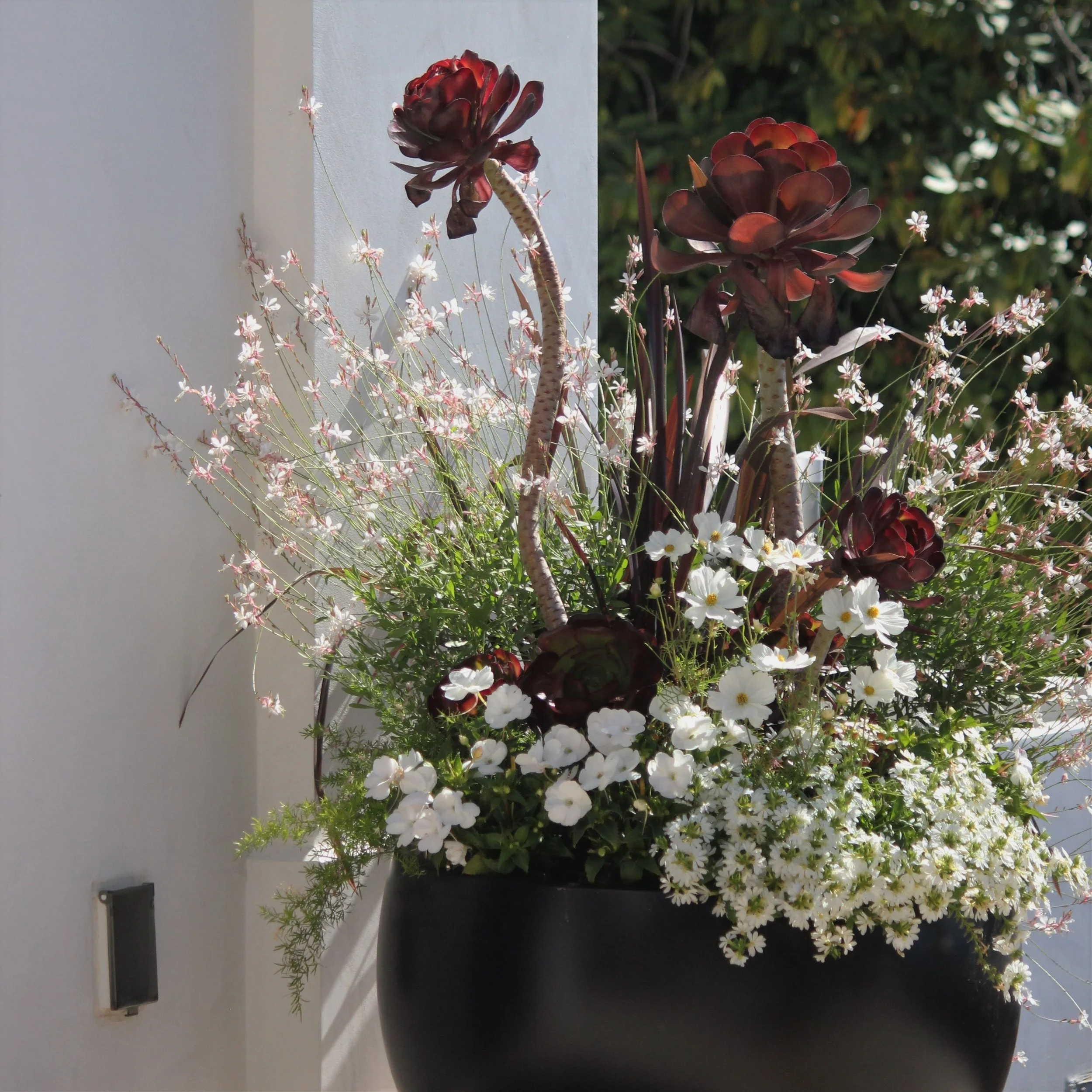
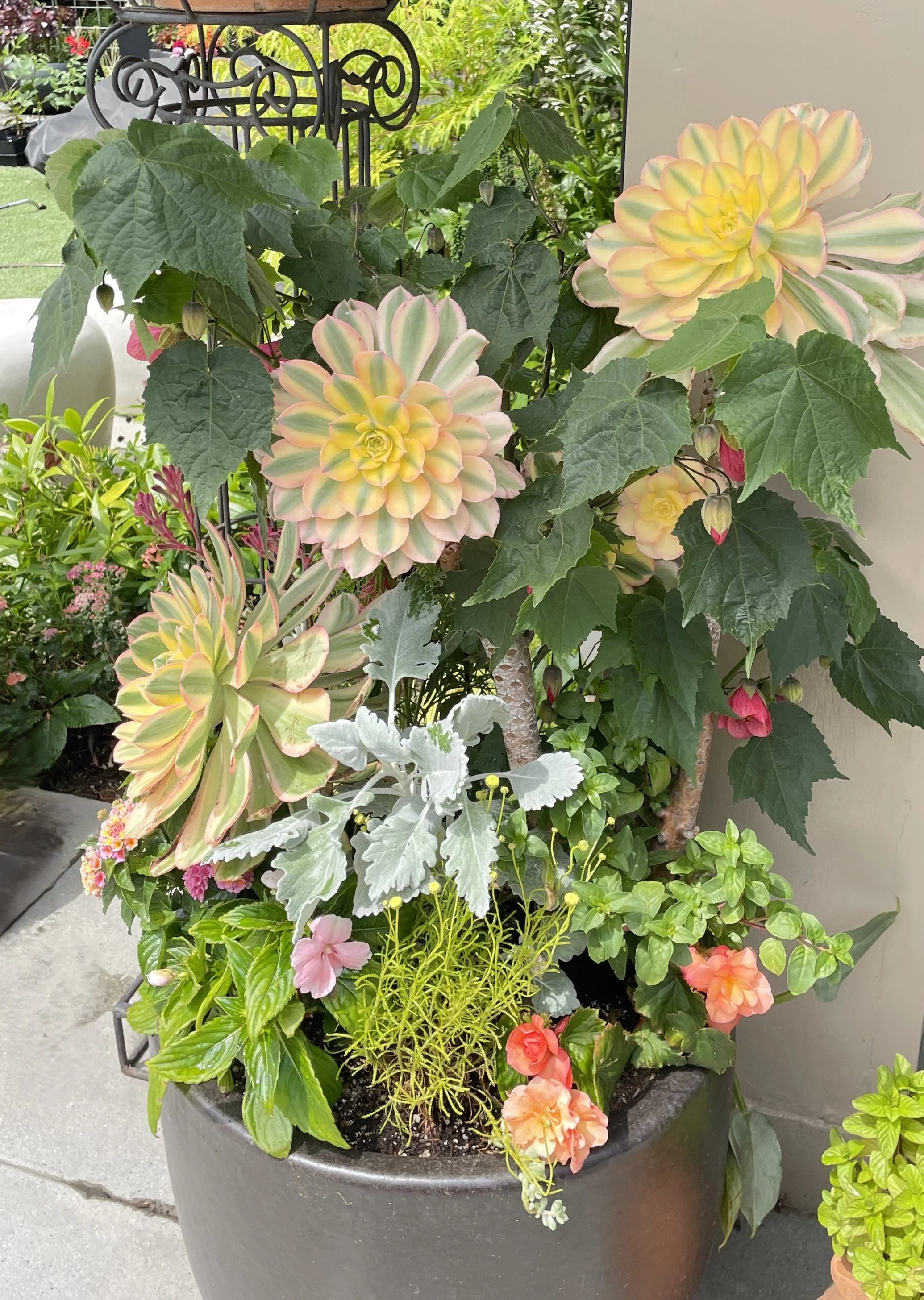
Photos Left to Right: Modern, Mediterranean, Cottage-Style
My favorites for containers
I’ve built my collection over many years, some plants being purchased outright, many others propagated from cuttings shared by friends or plants swaps over coffee. And although choosing a favorite is a little like picking a favorite child, next to impossible, these are the varieties I come back to again and again.
Aeonium ‘Zwartkop’ (aka Schwarzkopf). This was the very first variety I began incorporating into clients’ plantings. It’s also often the one people picture when they hear the word aeonium. Nearly black, with the center of the rosette staying a slightly purplish green, and its color deepening with the intensity of the sun. I use it as a dark anchor in a mixed planting, as a color echo to dark-colored containers, pulling the eye up and through the planting, and as its own solo focal piece. I’ve propagated and shared more cuttings of this plant than any other plant I grow. It’s even popped up on the side of my driveway. Don’t ask me how.
Aeonium ‘Cyclops’. Also known as Giant Red Aeonium, this showstopper is more tree like than some, reaching up to 4’ tall with long curved stems. It has massive rosettes that can be the size of a dinner plate, sometimes up to 18” inches wide. Its lovely bright green center, edged in reddish bronze, creates the bright eye that gives ‘Cyclops’ its name. The color only gets richer and deeper with more sun exposure which makes it a real stunner on a sunny patio. Mine survived outside this winter here in the Pacific Northwest, which leads me to believe it’s a little hardier than some of the other varieties.
Aeonium ‘Kiwi’. This smaller, lower-growing, multi-branching aeonium is the absolute sweetest. It’s small rosettes in cream, pink, and lime are delightfully stunning whether spilling over the edge of a pot or working as a filler to add texture and contrast amongst other plants. It’s a wonderful fit for cottage-style plantings, adding a soft femininity.
Aeonium ‘Pink Witch’. With striking bubble-gum pink variegation, this compact plant grows only 18” tall and is still often the star of the show. It’s gorgeous as a centerpiece in a container when surrounded by more neutral plants that let it take center stage or contrasted with deep purple plants that make the pink tones pop.
Aeonium ‘Sunburst’. With cool mint green, creamy white and butter-yellow variegation, it lends itself beautifully to Mediterranean-style designs. Its bold striping and large rosettes add brightness to a planting while the rosette edges which are tinged in a beautiful pink blush with stronger sunlight.
Aeonium arboreum ‘Atropurpureum”. Another favorite with rich, dark tones, its wine- colored foliage is a softer alternative to ‘Zwartkopf’, and it can reach an impressive height of 5’.
Aeonium arboreum ‘Medusa’. A little more finicky than others, it’s a favorite because of its striking color. Its rosettes blend dark green, magenta, and wine, with a center that contrasts in chartreuse and ivory. Its name derives from the mythological Gorgon’s hair, a nod to its prolific branching.
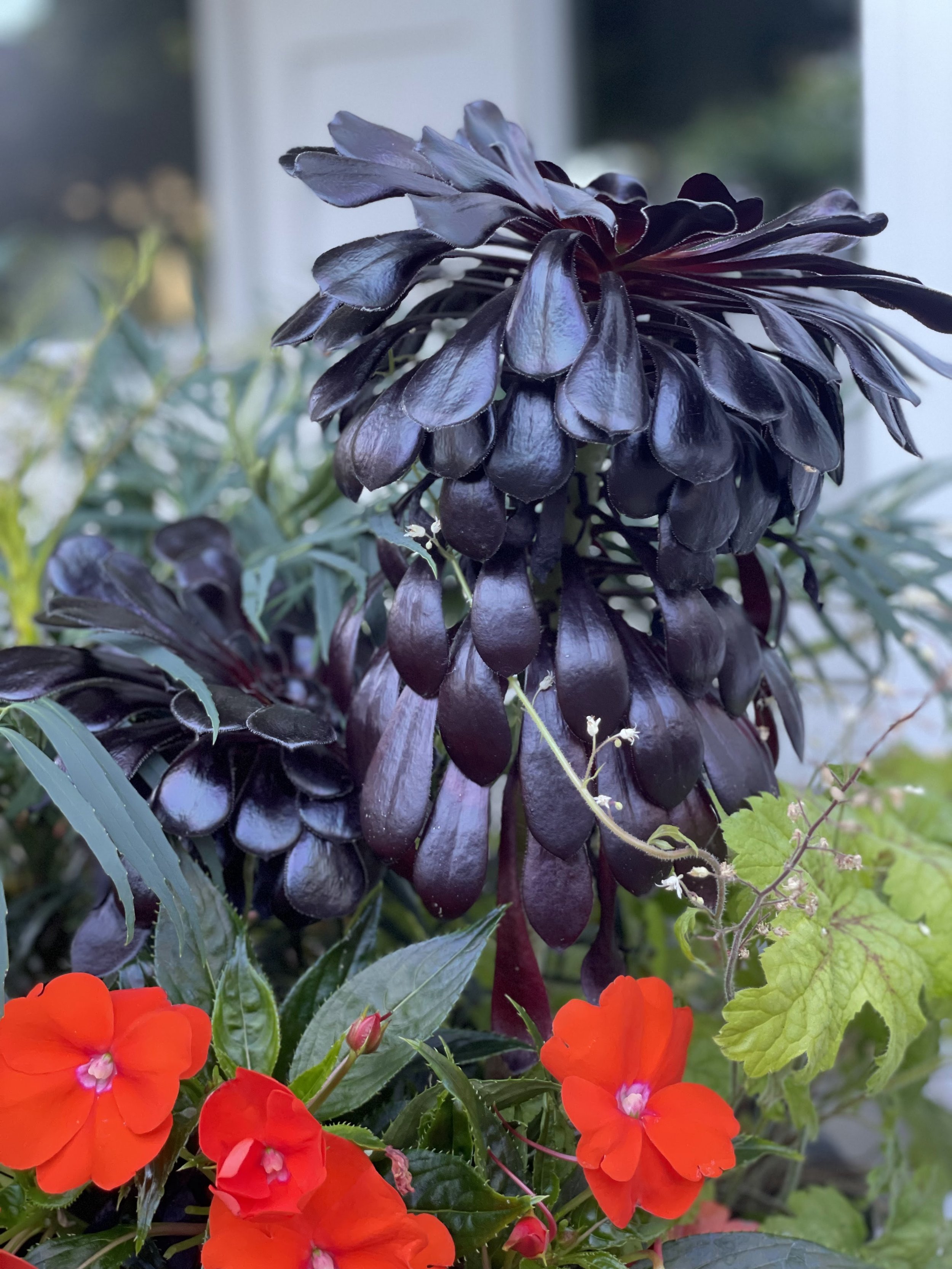
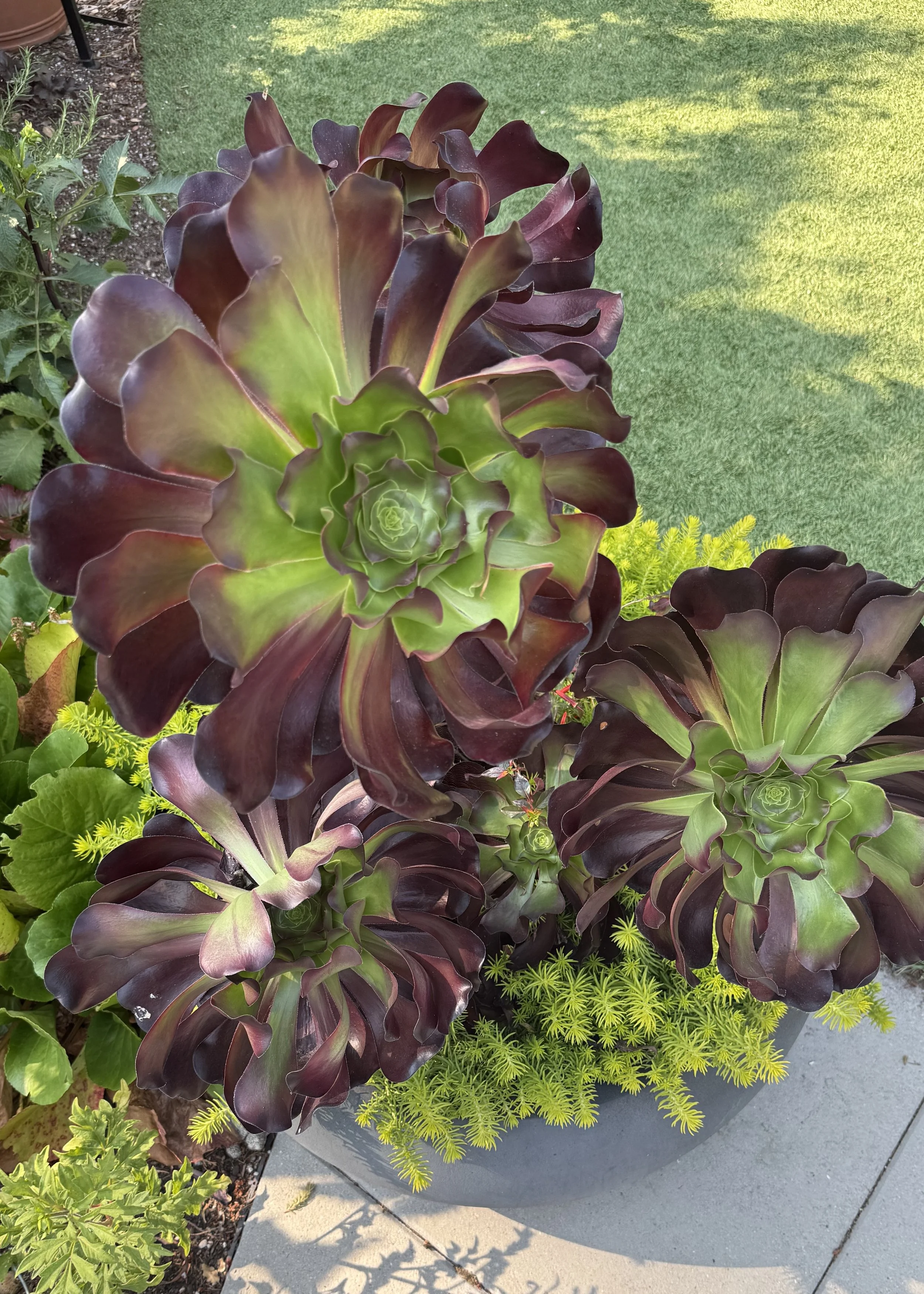
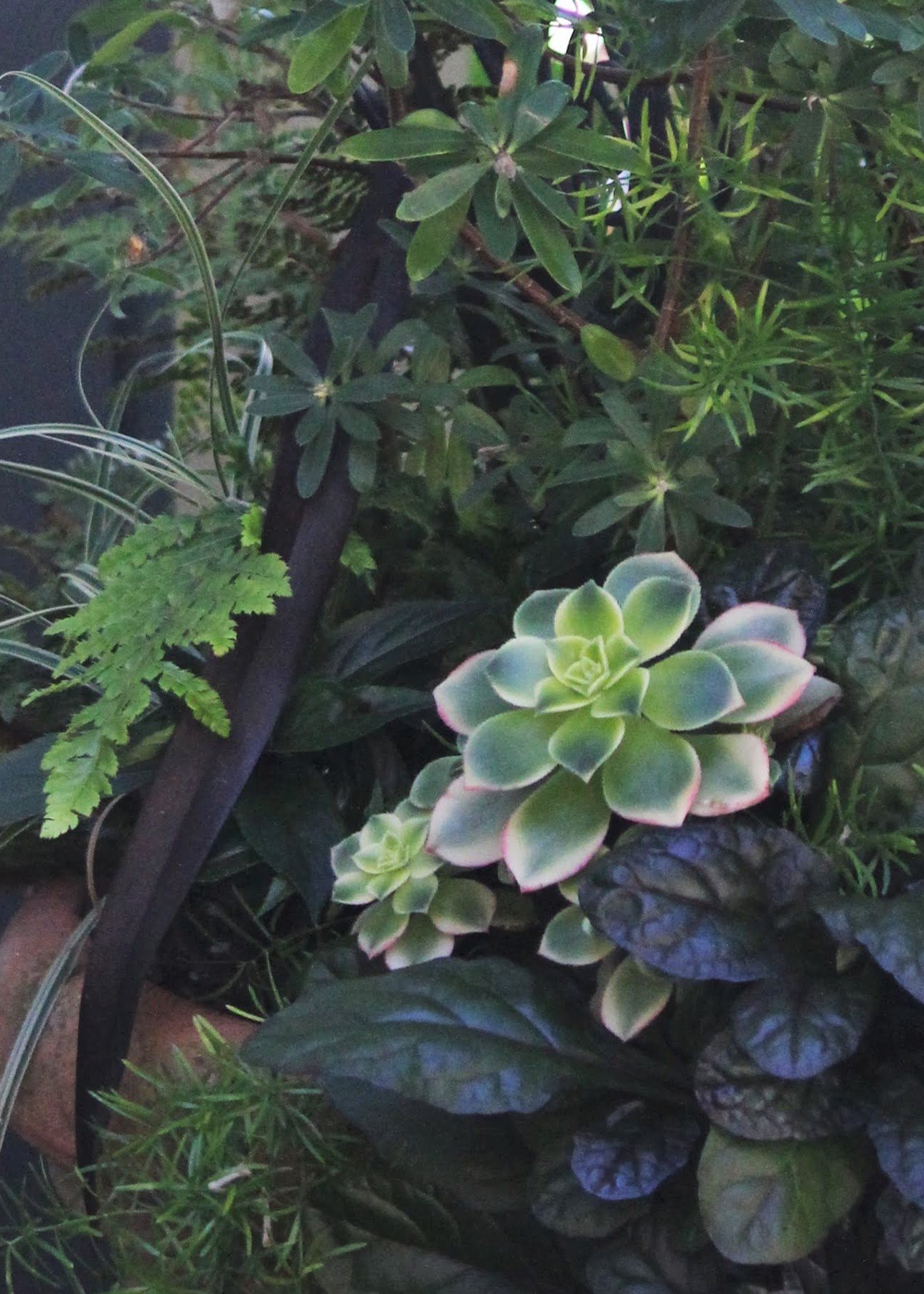
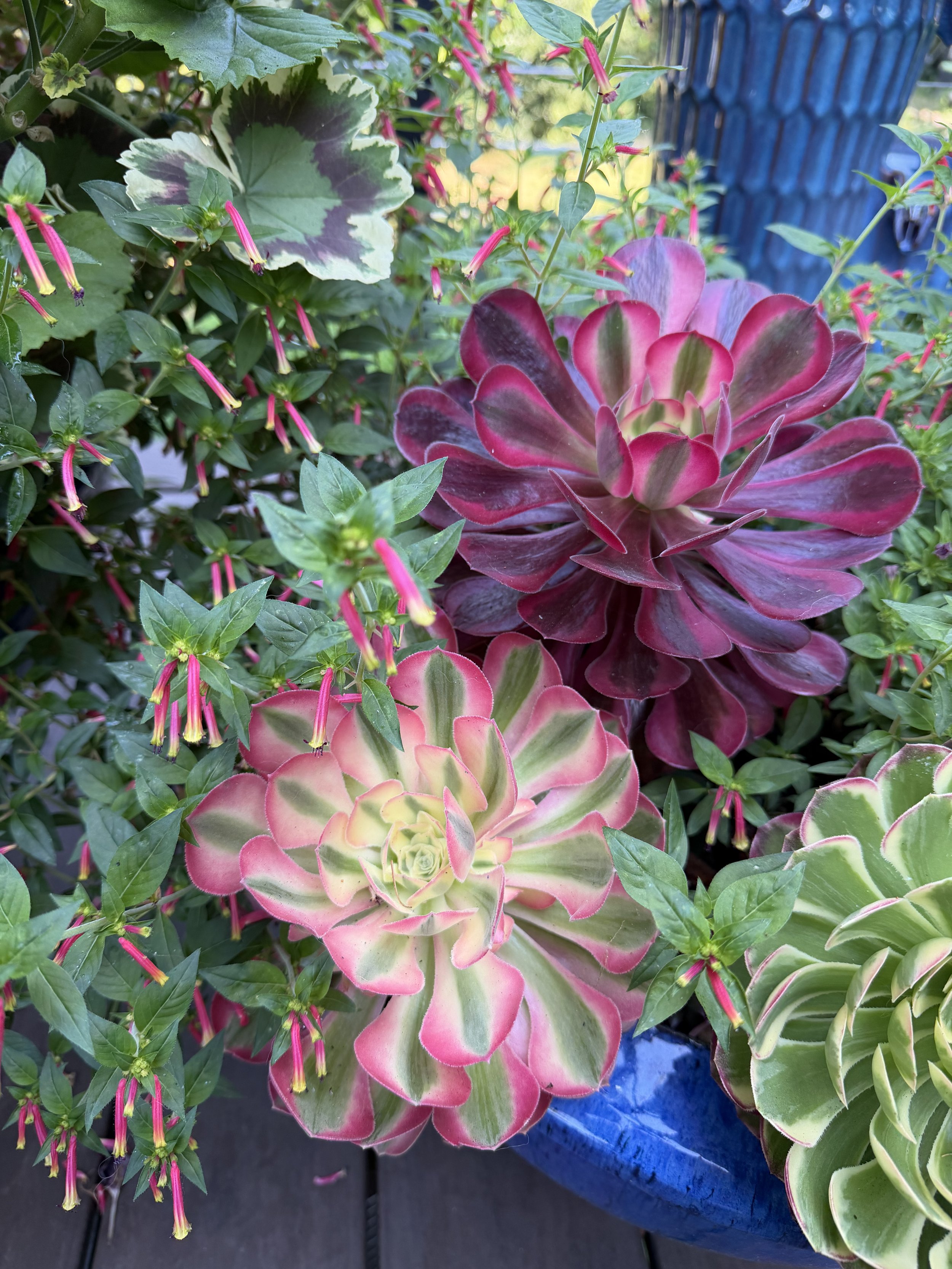
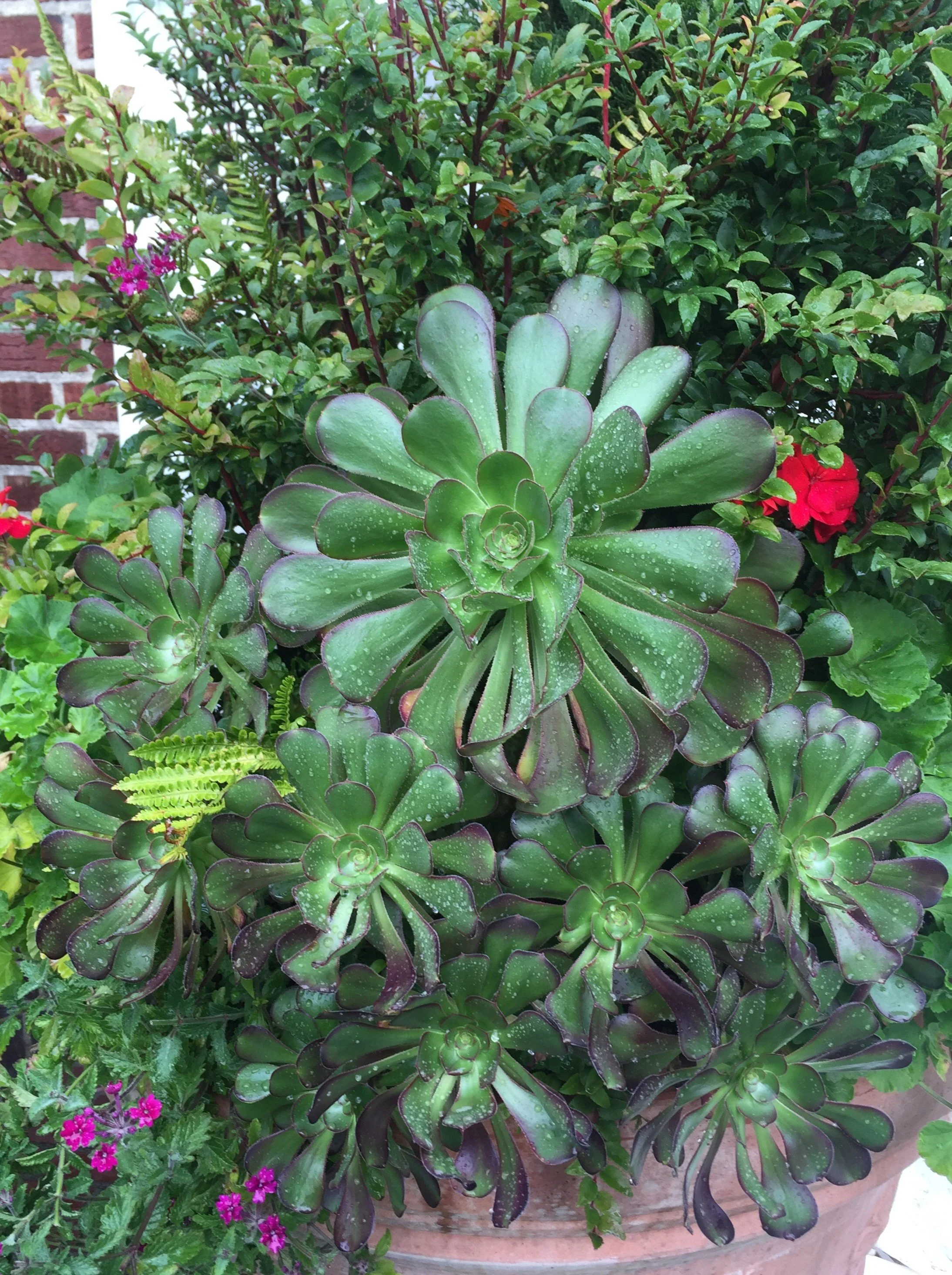
Photos Left to Right: Zwarkop, Cyclops, Kiwi, Pink Witch and Medusa, Atropurpurea
One thing to note is that aeoniums are monocarpic, meaning a rosette dies once it flowers. Single stemmed varieties may live three to five years before blooming and dying, while branching types can keep going since only the flowering rosettes dies while the rest of the plant continues to grow. It’s not something to worry about, but it is worth knowing if you’re investing in a larger specimen as a long-term focal plant.
Keep the love going: propagating aeoniums
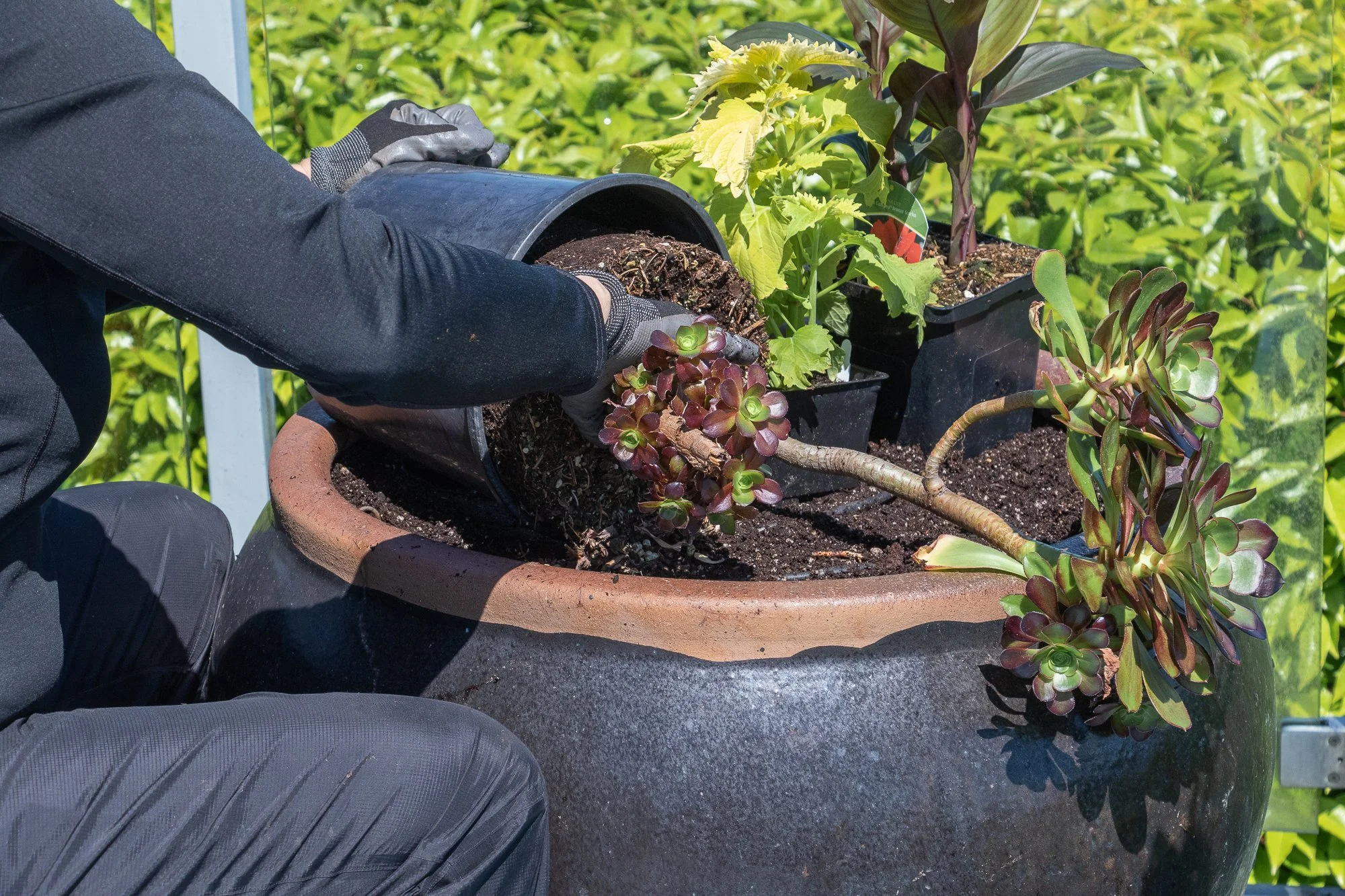
Remember that rosette cutting from earlier? Aeoniums are incredibly easy to propagate. Let the cut end sit somewhere dry and shaded for three to five days until it callouses over. This callousing over is an important step to prevent rot. Once calloused simply shove the stem about an inch into well-draining soil and water sparingly, just enough to keep the soil slightly moist until it’s rooted.
That’s it. You have a new plant. It’s genuinely one of the easiest succulents to propagate and how I’ve grown most of my collection. An accidentally broken stem or pruned rosette can easily become an inexpensive and rewarding way to grow more plants.
The best time to take cuttings is during the cooler months, like late fall or early spring, as they head into their active growth period. That said, I have been known to accidentally break a stem, let it callous, and stick it into a new pot with soil with some success.
How to care of aeoniums
The best time to pot up an aeonium is during its active growing season in late fall or early spring. Once you’ve tucked them into your plantings; they are refreshingly no fuss. No deadheading required. No regular pruning, and no heavy fertilizing to keep up with.
What they do need is fairly simple: well-draining soil, bright light and mild temperatures, and a little restraint with the watering can.
Light
Shoot for at least four to six hours of bright light a day to maintain their deep, saturated color. If they get less than that, they’ll stretch towards the sun and lose their shape and color intensity. Too much sun too quickly, especially in spring, when they’re first coming back outside, can scorch them and cause leaf burn. Acclimate them gradually, and in extremely hot climates give them some dappled late afternoon shade.
Water
Water deeply but sparingly, letting the soil dry out before watering again. Their roots are shallow and they store moisture in their fleshy leaves, but they still need a small, regular amount of water to keep growing well.
Aeoniums are winter growers, most active in cooler months and semi-dormant during summer heat. This means their roots take up less water in summer, making overwatering a concern.
Overwatering can also be a problem in winter, when cooler temperatures mean the soil dries more slowly.
Standing water is the fastest way to lose an aeonium to root rot so good drainage matters year-round.
Fertilizer
They’re not heavy feeders. In fact, overfeeding them with nitrogen can push soft, weak growth that is more prone to collapsing or rotting. I like to work Jack’s ClassiCote, a time release fertilizer, into the soil when planting to promote healthy foliage and root development.
Temperature, hardiness and winter care
This can be confusing because guidelines online are often inconsistent.
Generally, aeoniums do best with warm summers, sporadic rain, and mild winters. The biggest challenge can be cold, wet weather and protecting them from hard freezes.
In frosty climates, that protection can translate into moving pots into an unheated greenhouse, well-lit shed, or indoors near a bright window for overwintering.
Here in the PNW, I leave mine outside as long as I reasonably can, usually until temperatures consistently hit the mid 30’s, then play a hedge-my-bets game. Some stay outside in containers under frost cloth when temps fall below freezing, others move into my daylight shed for the winter, and I leave a few out unprotected to keep testing just how hardy they can be.
Through the darkest, shortest days of winter, I water lightly, since cooler temperatures mean the soil dries more slowly, just enough to keep the foliage from shriveling without creating conditions for root rot. In March, when the weather warms up, I gradually reintroduce them to the outdoors and increase watering, acclimating them to the changes in temperature and light to avoid burning.
They can’t cope with winter frost or winter wet, particularly in combination. The goal is to keep them above freezing and out of standing winter wet which can honestly be more dangerous to the aeonium than the cold itself.
A few things to watch for
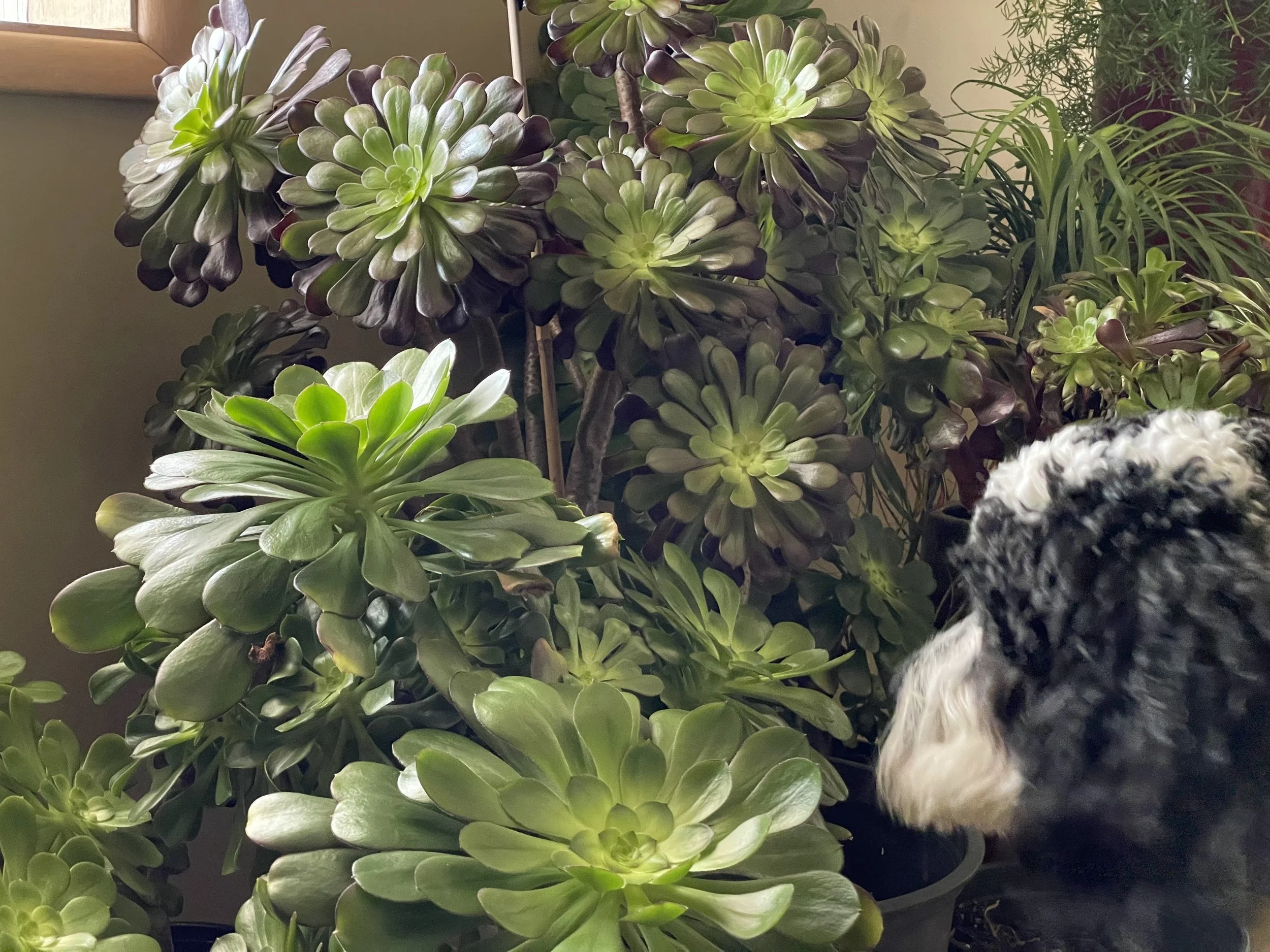
Aeoniums are pretty pest-resistant overall. Their thick, waxy leaves deter most common pests, but one pest to keep an eye out for is aphids especially on the fresh new growth. A quick jet of water or insecticidal soap to knock them down usually handles it.
Snails and slugs can also sometimes be a nuisance. They chew on leaves, leaving holes. They’re easy to spot and managed with your preferred slug-control method.
The bigger risk though is almost always us. Our tendency to overwater and over nurture, which can lead to root rot, is one of the most common ways aeoniums fail. Remember to ensure good drainage and allow the soil to dry out between waterings.
And don’t be too concerned about some leaf drop. Aeoniums naturally shed older leaves, especially during summer. Just take note if the drop becomes excessive, since that can be a sign of overwatering, too little light, drought stress or too much sun.
Your potted aeonium may need repotting after a few years. Watch for slowed growth, soil drying out too quickly, or roots emerging from the drainage holes.
The Bottom Line
Aeoniums are stunning, low maintenance succulents that can bring bold color, striking shape, and texture to your container plantings. They grow at a moderate pace, in a tight structured way that doesn’t need much pruning or thinning.
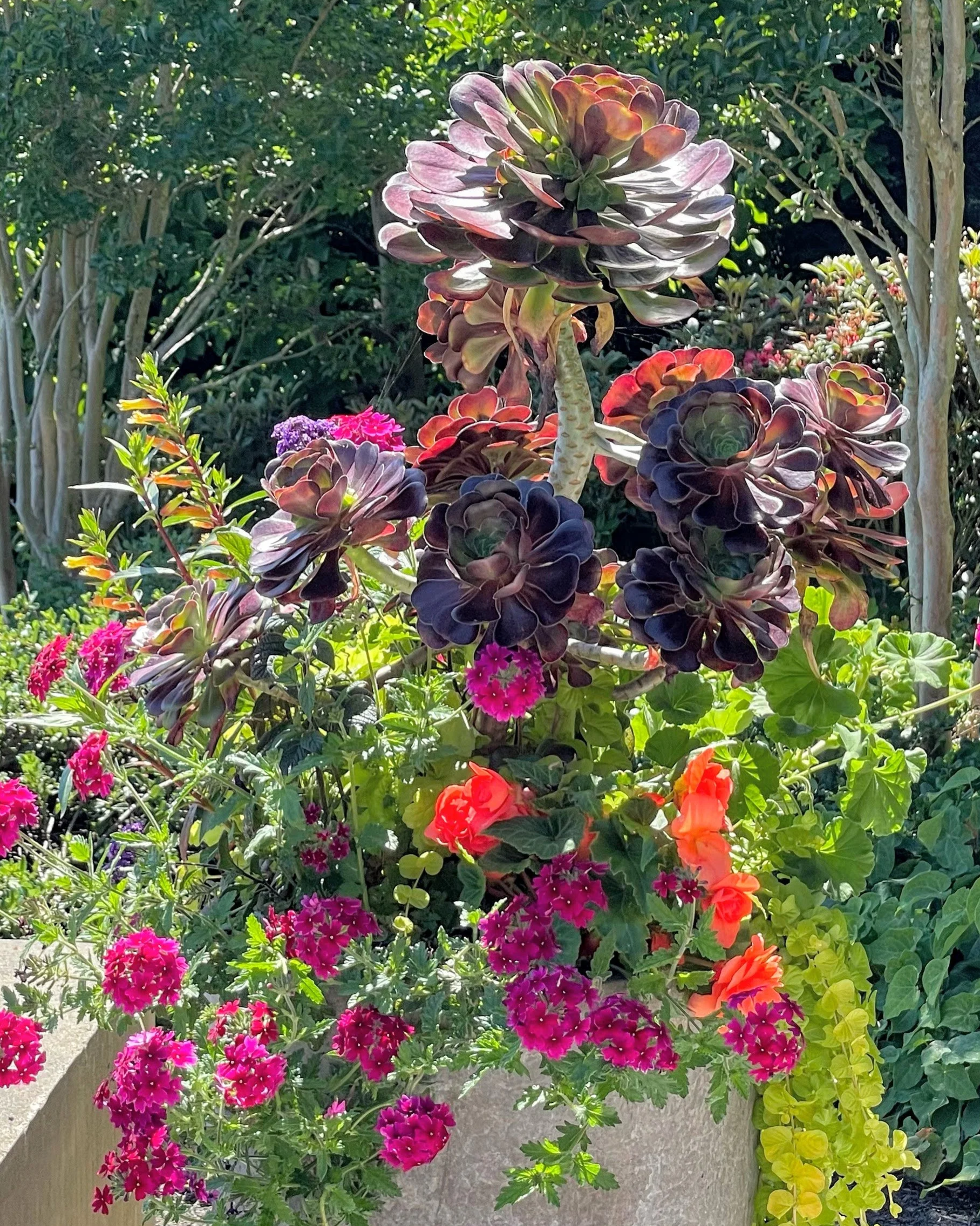
Every season, I’ll look at a container that feels just a little “meh”, add a single aeonium and see the planting entirely transform. That’s the magic of this plant. It can take a good container planting and turn into a living sculpture of “WOW”.
Give it good light, a well-draining pot, and a little restraint with the hose, and it will reward you generously. Even the name aeonium means “ageless”, a nod to the long-lasting nature of the plants. If you’ve never planted one and with so many varieties to choose from, autumn can be a great time to give it a go. You’ll have winter and spring to establish a small plant and develop its root system while the weather is cool, and it will be that much stronger when warmer weather rolls around. Not to mention, I guarantee that it’ll spark joy, start conversations, and offer beauty with relatively little effort.
-Cindy
Note: Some of the links in this post are affiliate links, which means I may earn a commission if you make a purchase through them. I only recommend products I use and love like Jack’s Fertilizer. Thank you for supporting my small business.