Designing with Patio Trees
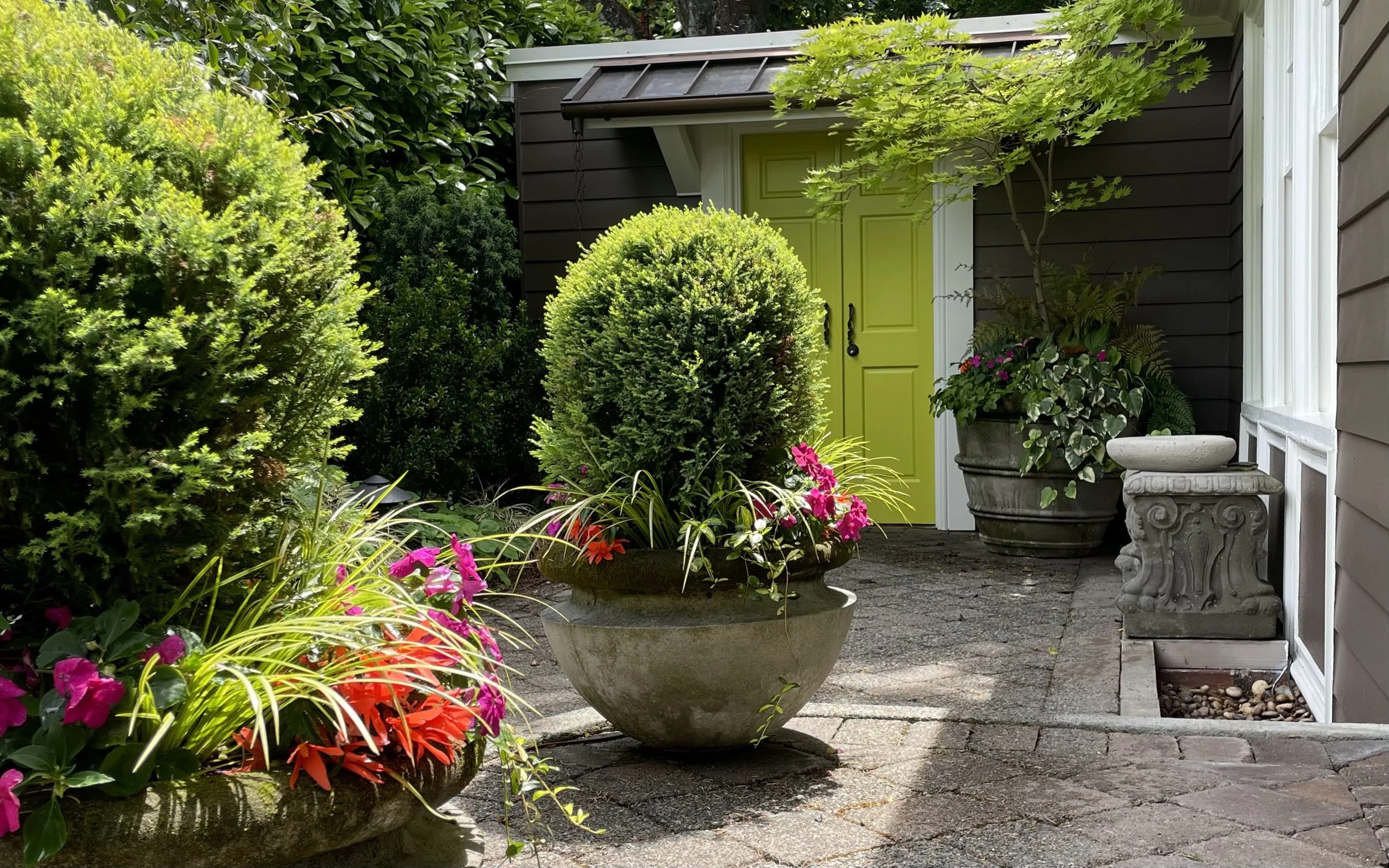
Patio trees may bring to mind a Charleston porch or a sunny California courtyard, where porches, patios, and container gardens are woven into daily life. But you don’t need either to appreciate what a patio tree can do.
A well-placed patio tree goes beyond looking pretty. It gives a space height, structure and a lovely sense of arrival. It can soften a corner, frame an entrance, give a seating area just enough definition to feel like its own little room, or help the patio feel more connected to the home and garden around it.
For the homeowner, it’s a beautiful way to make a porch, deck, entry or outdoor seating area feel more polished and inviting. For the professional designer, it’s one of those strong, simple gestures that can make a space feel thoughtfully designed without feeling overdone.
It can take a patio from “that’s nice” to fabulous.
So, What is a Patio Tree?
A patio tree is generally a smaller tree or shrub trained into a tree form, defined by its smaller size and ability to grow well in containers.
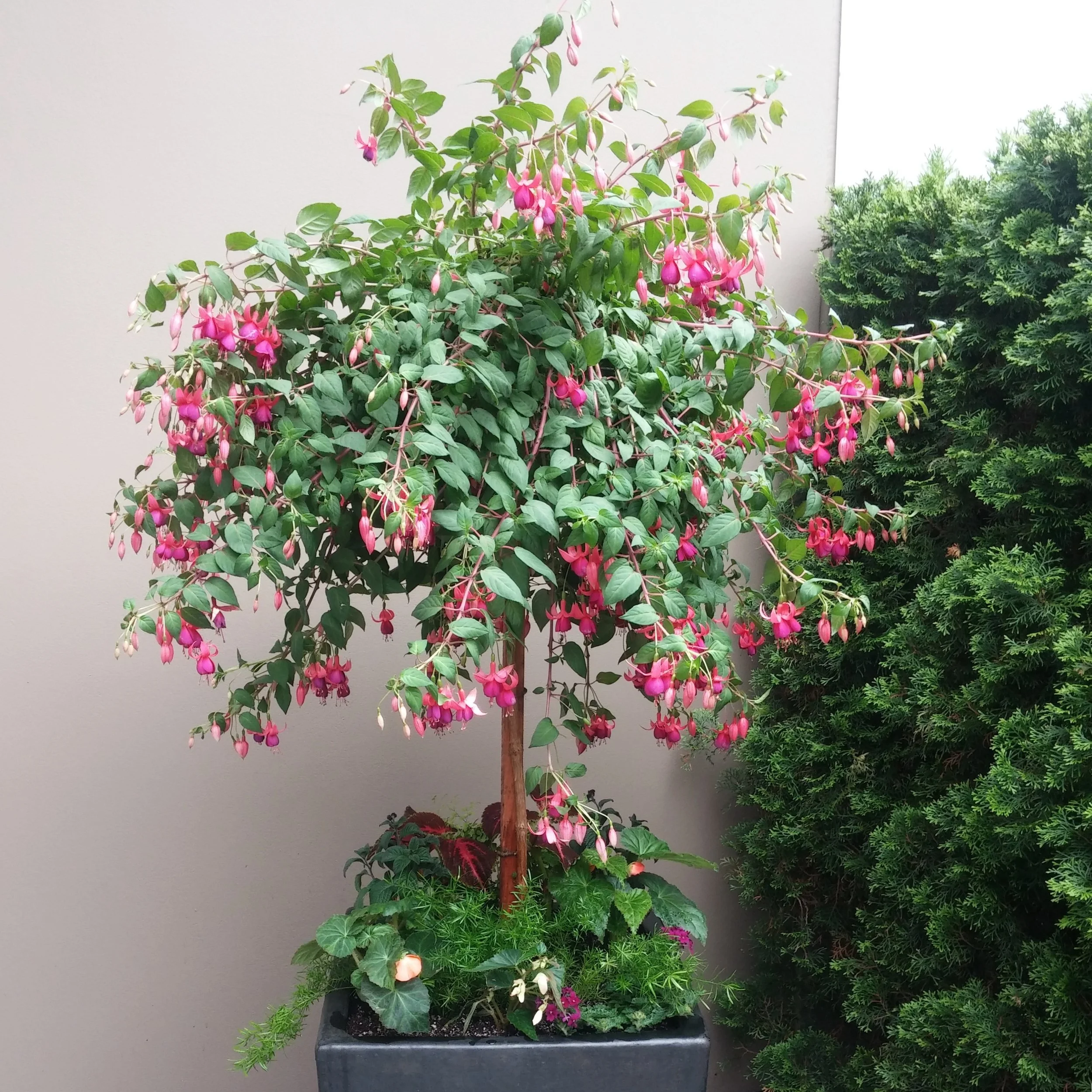
You will also hear some called standards, particularly when a shrub has been trained into a single trunk with a round, elevated canopy. Others are topiaries, meaning they’ve been clipped into a distinct shape, such as a ball, spiral, cone, or tiered form.
But patio trees are not always formal. They can also be loose, flowering, romantic, and full of movement.
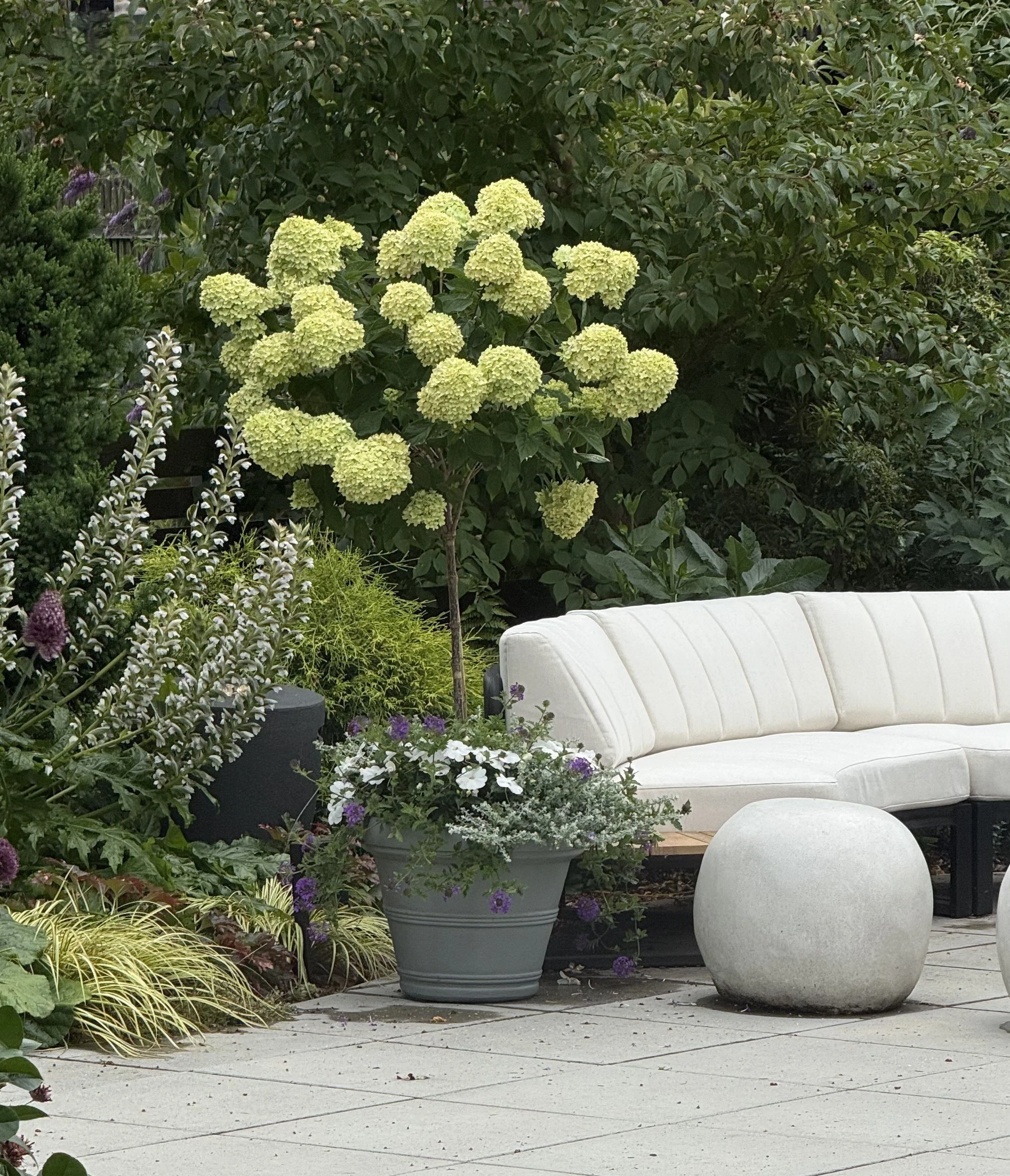
A patio tree might be a hydrangea or fuchsia trained into a tree form; an evergreen standard, a dwarf citrus; a Japanese maple; or compact conifer. It can stand on its own in a beautiful pot or be underplanted with annuals, perennials, herbs, and bulbs for a more lush, layered look.
In reality, many small trees or shrubs can work nicely as patio trees when their mature size and growing habits are suited to container life. The common thread is the height, structure, and presence they bring to a space.
Start with the Pot
Because patio trees are vertical and sculptural, the pot carries a bigger role than it might with a lower seasonal planting. It becomes the base of the whole composition, having greater visual weight much like an anchor piece of outdoor furniture.
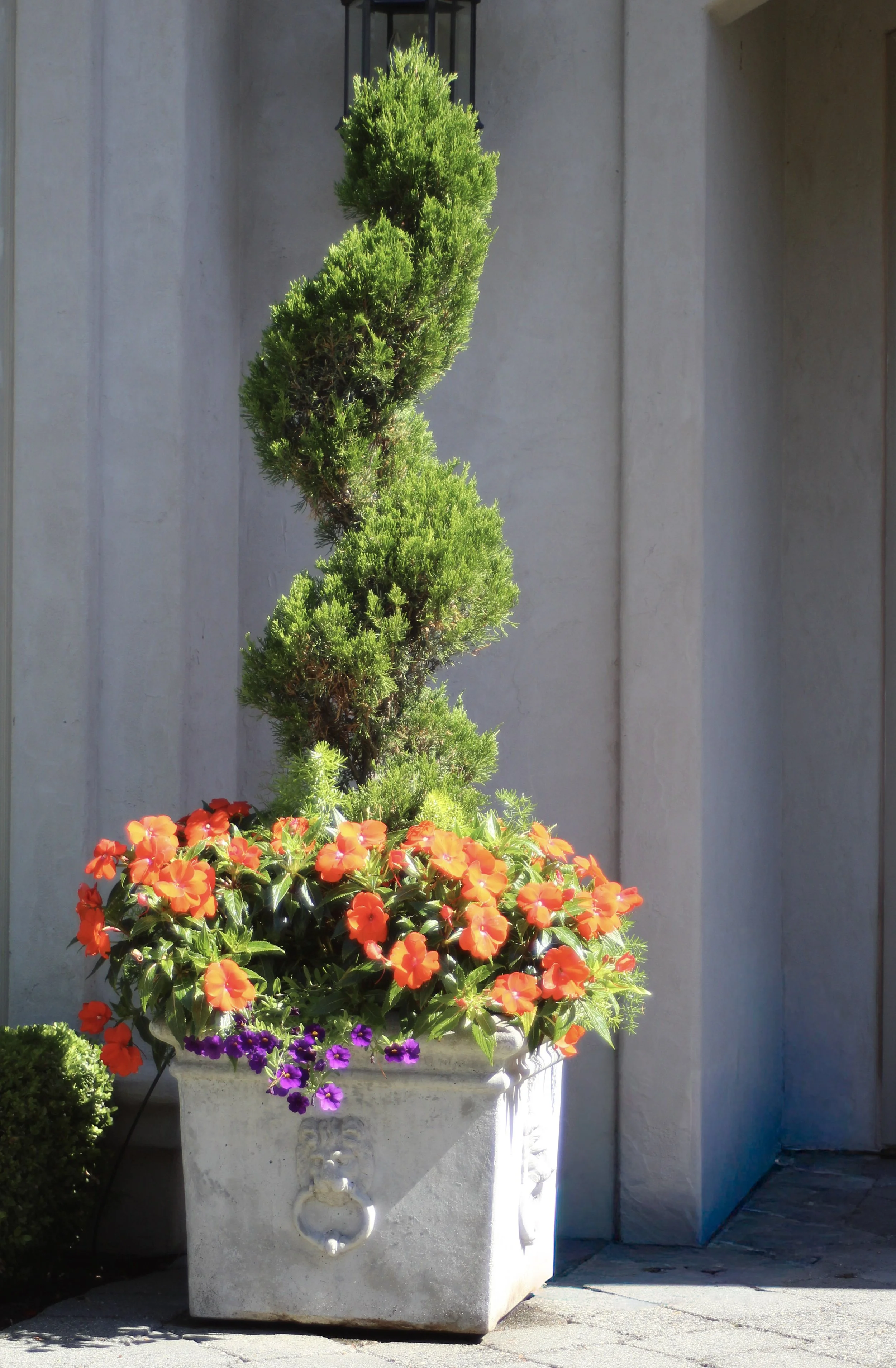
The container is more than the vessel holding the plant. It should feel like part of the overall design.
Consider the style of the home, the surrounding landscape, nearby furnishings, and the mood you want to create. Are you leaning traditional and formal? Warm and Mediterranean? Clean and contemporary? Soft and cottage-inspired? The answer can help guide you in the container’s shape, material, and color.
Because the patio tree is typically the focus, I tend to keep the planter classic and natural in color and style. Terra cotta brings warmth and an easy, old-world charm, while black and bronze containers feel elegant and quietly grounding. Glazed pottery adds color and personality, especially when the glaze picks up a color from the home, outdoor furnishings or surrounding garden.
It also helps to think about the material beyond how it looks. Plastic, fiberglass, and resin containers tend to hold moisture longer, while porous materials like unglazed terra cotta dry out more quickly. Some containers are easier to move, others offer more stability, and some are better able to stay outside through the seasons. All can work beautifully when the material fits the location and the way you garden.
Keep the Pot In Scale
Scale matters too. The pot should feel in proportion to the tree and the patio around it. Too small, and the planting can feel top-heavy. Too large, and the tree can look like it’s floating in a sea of soil rather than belonging to the pot. The goal is for the tree, the pot, the home, and the patio to all feel like they’re in conversation with one another.
I like to use the rule of thirds as a guide with the pot making up roughly one-third of the total height, and the tree the remaining two-thirds. It’s not meant to be fussy or exact, but it can help the planting feel balanced and not out of step with the space. The right-sized pot also does more than keep things in scale. It gives you more room for underplanting, better moisture consistency and a more stable base.
And yes, as always, drainage matters. Make sure your container has drainage holes.
Give the Space Some Shape
Patios and decks are often big, flat, open squares. They are wonderful places to gather, but they can also feel a little drab or be challenging to design. A patio tree can change that by adding height, softness and a sense of enclosure that helps the space feel more intentional and inviting.
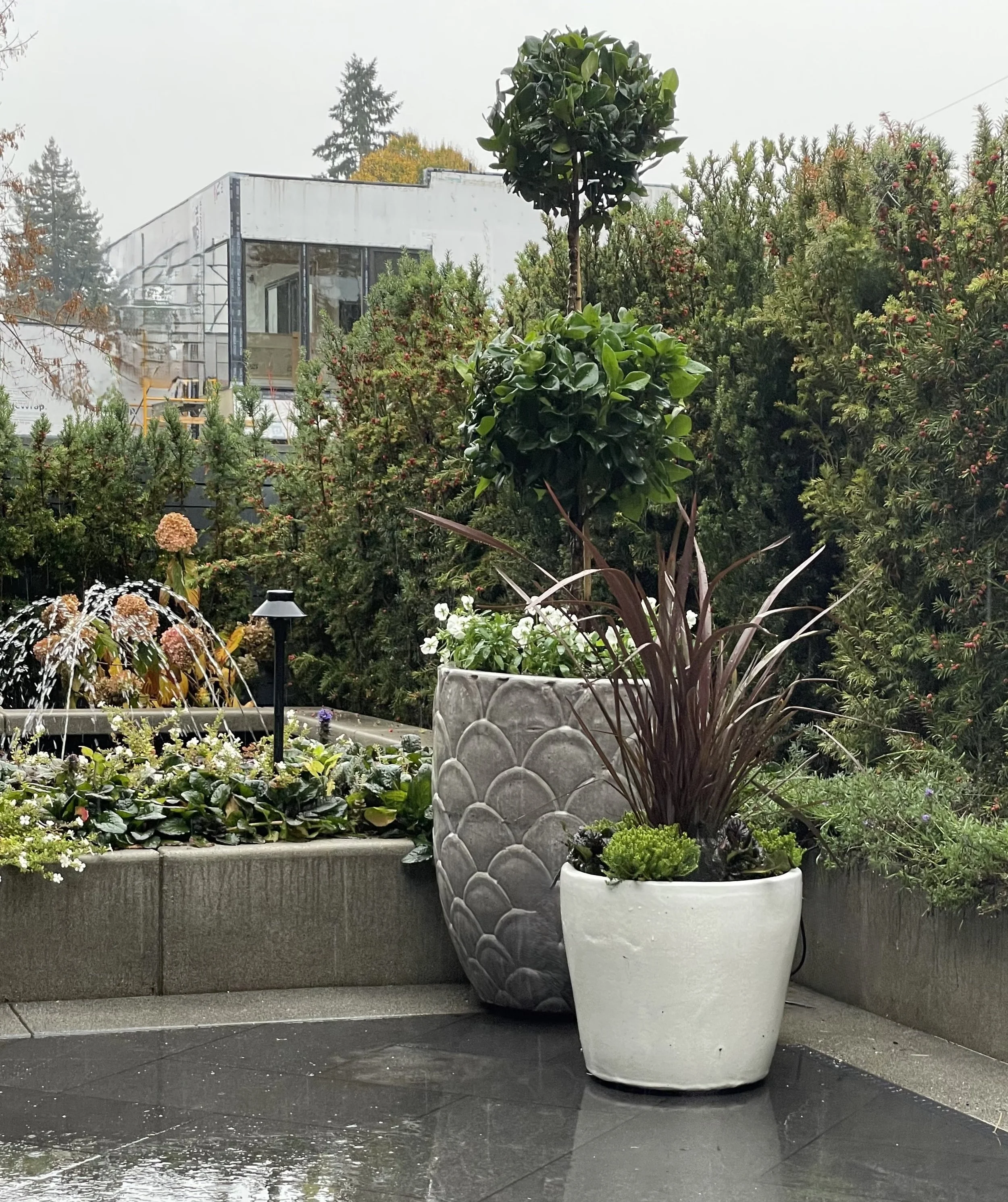
One of my favorite ways to use one is to mark a transition. This might be the entrance to a front porch, the point where you pass through a gate, the beginning of a walkway or the edge of a seating area.
A recent design for a client is a good example. I placed a Hibiscus ‘Chateau de Versailles’ patio tree just beyond the gate at the entrance of the backyard. The idea was simple: create an immediate sense of arrival, structure and beauty the moment someone stepped into the space.
And that, to me, is the role of a patio tree. It doesn’t simply decorate a patio. It changes how you experience it.
One Patio Tree or a Pair?
A single patio tree can be used as a sculptural focal point, filling a space between doors and windows, softening a corner, breaking up a blank wall, or giving a stark patio a wondrous place to pause visually. This approach often feels relaxed, natural and collected.
A pair of patio trees brings a different kind of energy. Placing identical trees in matching containers on either side of a front door, garden gate, or stairway creates a natural frame. It helps to accent the front door and brings symmetry, formality and a clear sense of welcome.
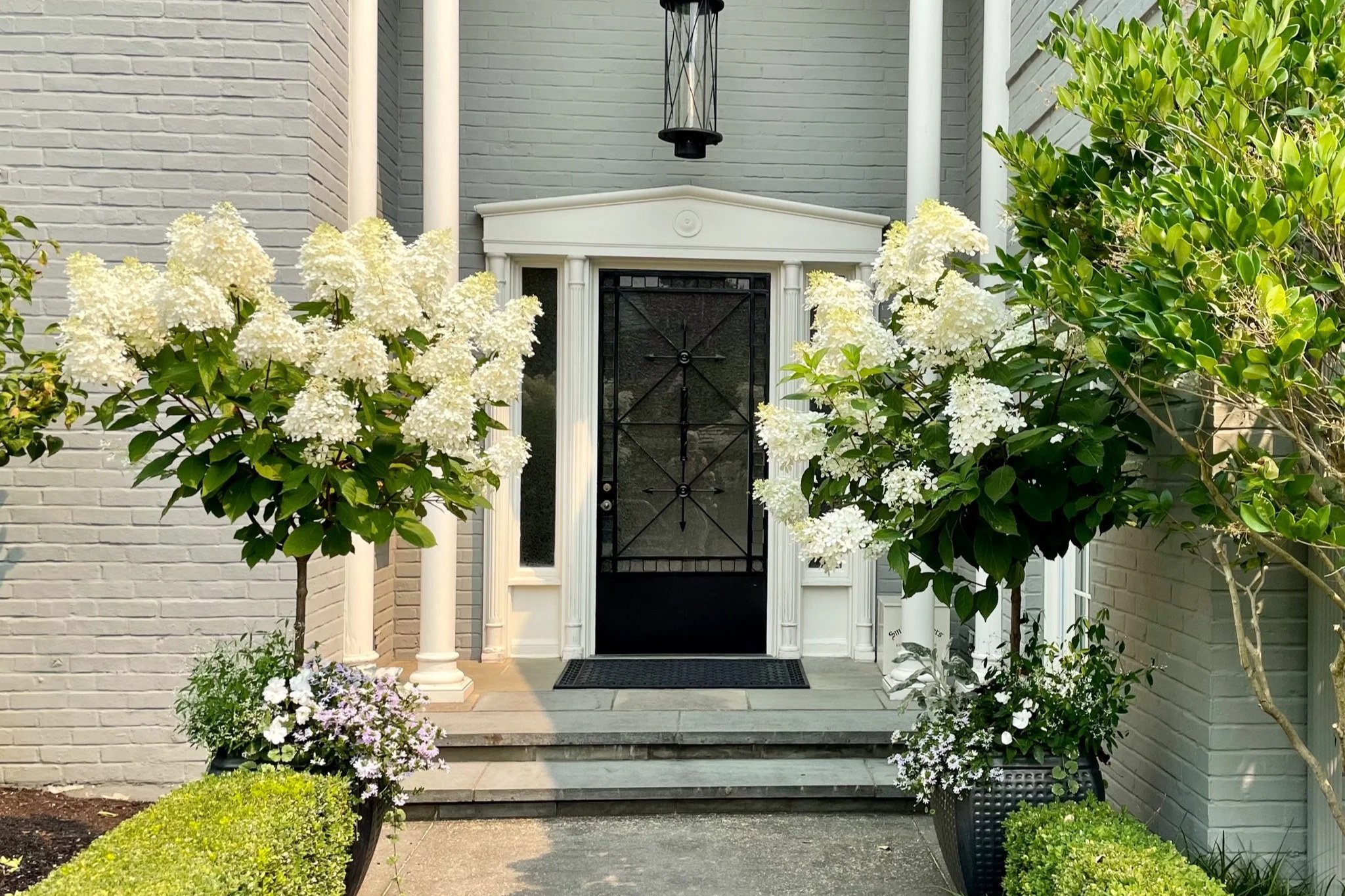
A single patio tree can become a sculptural focal point, filling a space between doors and windows, softening a corner, breaking up a blank wall, or giving a stark patio a pretty place for the eye to land. Used this way, it often feels relaxed, natural and collected.
A pair of patio trees brings a different kind of energy. Identical trees in matching containers on either side of a front door, garden gate, or stairway create a natural frame. They draw attention to the entrance and bring symmetry, formality and a clear sense of welcome.
You can also place a pair across from one another to define a patio or seating area. Rather than framing an entrance, they frame the space itself, making it feel more curated and complete. Both approaches feel classic and elevated and can give a patio a high-end estate-feel without redesigning the entire landscape or spending a fortune.
The key is deciding what the space wants.
If the setting is more formal, a pair may feel right. If the space is more relaxed, one patio tree tucked into a larger grouping may feel more natural. Neither approach is better. They simply tell a different story.
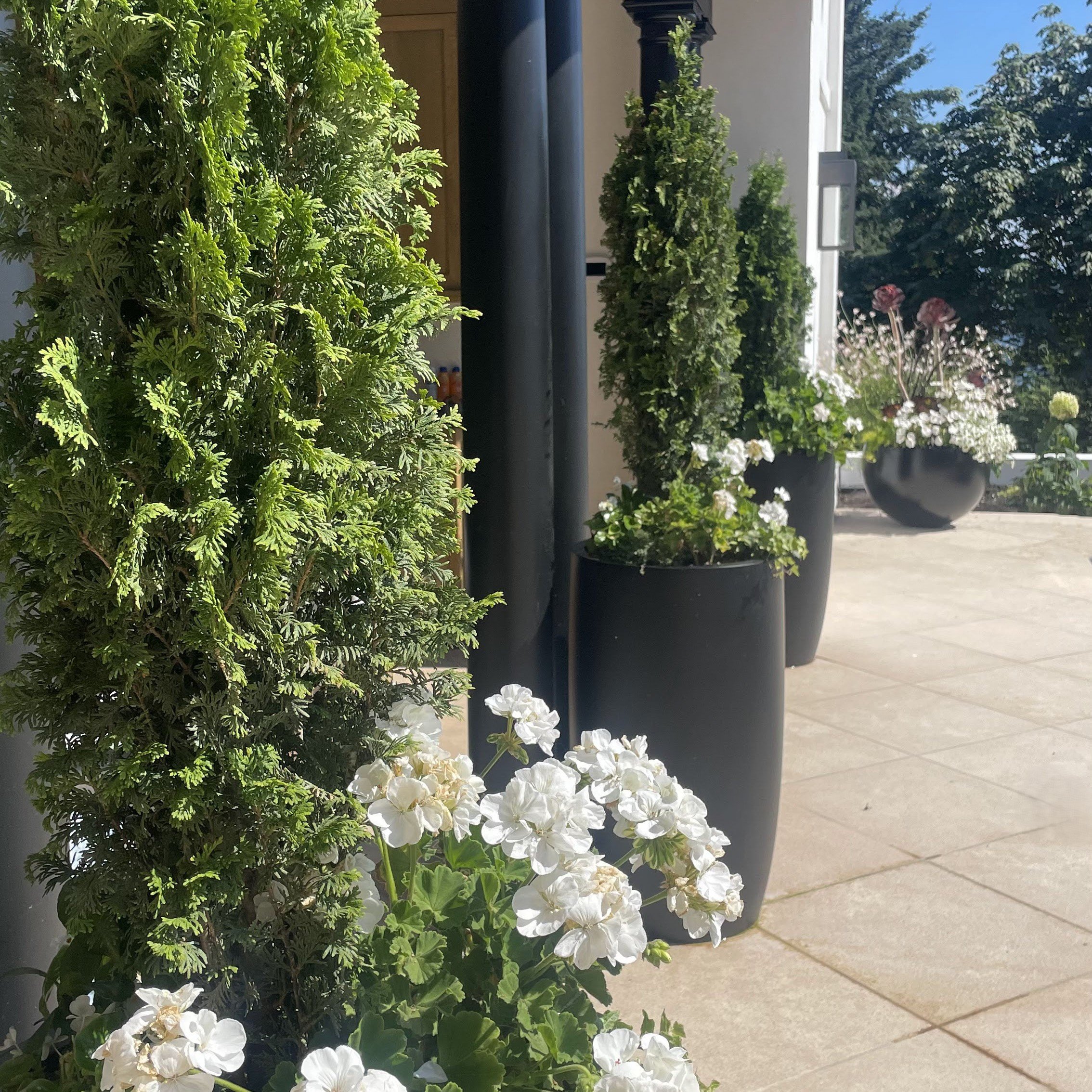
A row of similar trees can guide the eye along a path, edge a patio or gently mark the transition from one area to the next. Repetition creates rhythm and helps the garden flow.
Placed intentionally, a patio tree becomes part of the structure of the space, rather than a pot simply set down on a surface, helping the patio feel more like an extension of living space and outdoor living room.
This can be especially helpful in tight corners of patios and balconies that can be challenging to design. Too many small pots can look cluttered, while leaving the corner empty can feel unresolved. One tree brings height and interest without requiring much square footage. Add a simple underplanting around the base, and suddenly that awkward corner becomes a lush, little moment,
Think in Layers
I often underplant patio trees, and that is where the real fun begins.
Underplanting helps ground the tree. Without plants beneath it, a tree with a narrow trunk and elevated canopy can sometimes look a little lonely. Fillers and trailing plants allow you to repeat color, soften the pot’s edge and bring another layer of seasonal interest into the design.
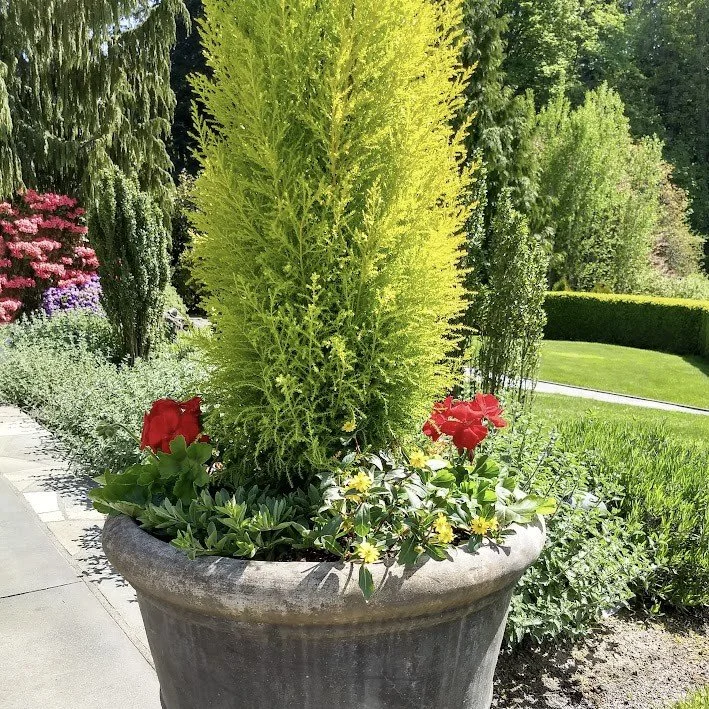
The patio tree should remain the star, or at least the main structural element, while the plants beneath it play quieter supporting roles rather than compete with it.
I think of the planting in three layers:
The canopy: This is where the height, shape, flowers, fruit or foliage make their statement.
The trunk: This should be left as open space. It creates important breathing room, and you don’t need to be quick to hide all of it.
The underplanting: This adds softness, seasonal color, trailing texture, or a color echo that ties the whole planting together.
Let the tree guide what you plant beneath it. Repeat a color from its flowers, stems or container, or use seasonal annuals to shift the mood around an evergreen. A loose, airy canopy can be balanced with more structure below, while a neatly shaped topiary can be softened with something relaxed, flowy, or trailing.
As always, make sure the plants share similar light and water needs. A sun-loving patio tree that wants regular water should be paired with companions that enjoy the same conditions.
You also don’t have to fill every inch of soil around the trunk. A few well-chosen plants are often all you need. The underplanting should finish the composition, not overwhelm it.
Design for Comfort, Privacy, and the Seasons
A patio tree won’t cast the same amount of shade as a large tree planted in the ground, but it can still make an outdoor space noticeably more comfortable and inviting.
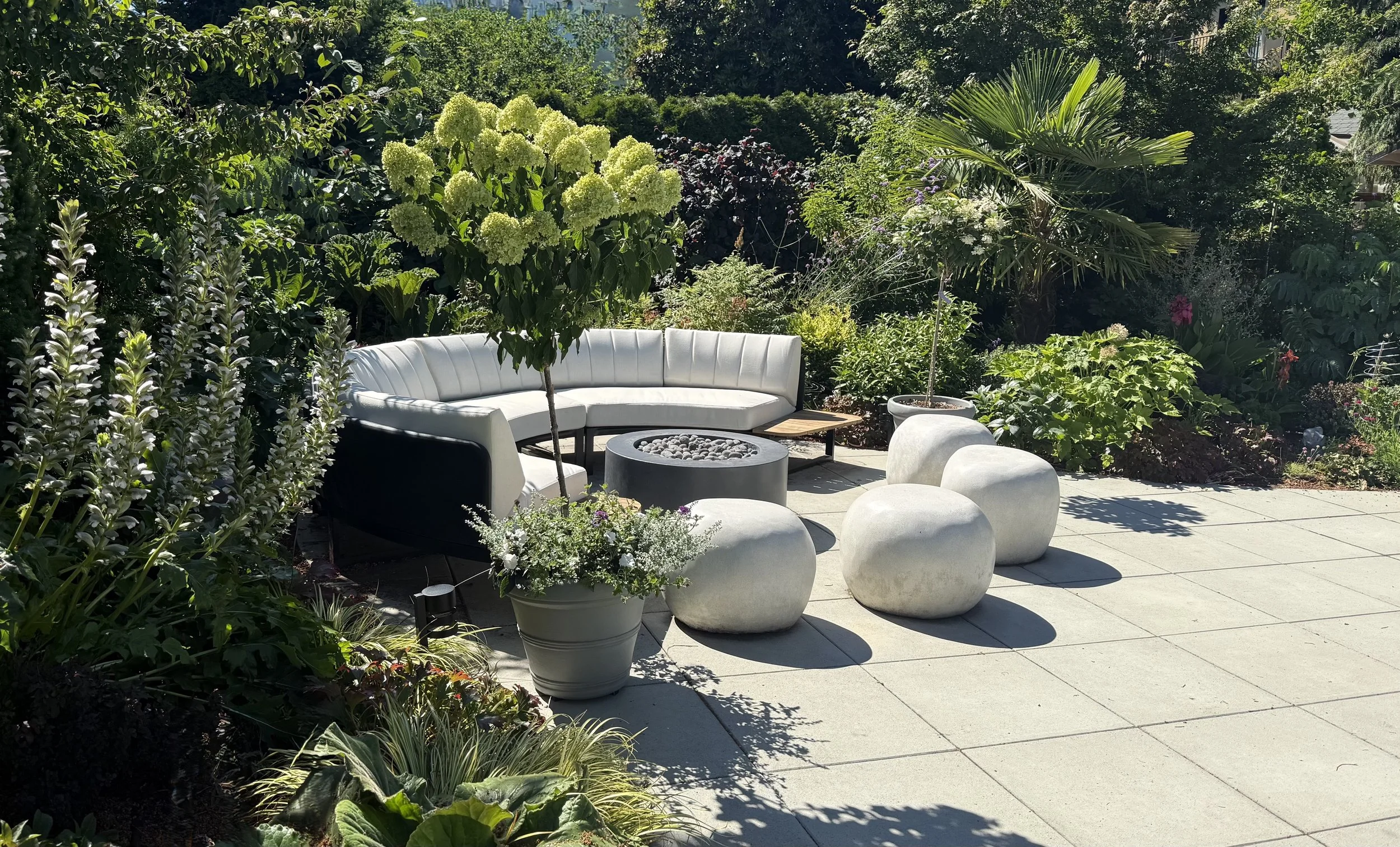
On a sunny deck, positioning a patio tree where its canopy can soften the intensity of the afternoon sun can offer welcome relief during the warmest part of the day. Even a small canopy can filter light across a table or seating area, create a bit of cooling shade, and cast lovely shadow patterns that make hard patio surfaces feel more alive.
Patio trees can also add privacy in a gentle rather than heavy-handed way. A single tree can interrupt an unwanted view, soften a fence line, or create a small buffer between your patio and a neighboring window. A row of similar trees can act as a living screen or bring a more enclosed feeling to the edge of a deck or patio.
This kind of privacy is subtle. It filters more than it blocks, giving you a little breathing room without making the space feel closed in.
Don’t Forget Fragrance
Fragrance can be easy to overlook, but it is another quiet design detail that can make a patio feel more inviting, personal and alive. A flowering citrus near a seating area or a lilac beside a gate can change the whole experience. Suddenly, it’s no longer just about what you see when you step outside, but what you smell and what memories or emotions that fragrance stirs.
This can be especially lovely near a dining table, beside a lounge chair, or along a path you brush against often. Fragrance lingers, and that lingering can make a patio feel less like a place you move through and more like one you want to stay for a while.
Let it Carry the Seasons
Another lesser-known benefit of patio trees is that many can hold a space through more than one season.
Through spring and summer, they bring structure, flowers, foliage and fruit, or a lovely combination of the four. In fall, grasses, violas and spring-blooming bulbs tucked beneath the tree can shift the season’s mood. Even a bare, deciduous tree can add interesting branching form in winter.
And yes, you can string twinkle lights through the branches.
A few simple lights woven through a tree can create a cozy, brightened moment on a winter patio, whether the tree is evergreen or bare branched. It’s a small touch but one that can make the space feel cared for and alive during the darker months of the year.
A Few Favorite Patio Tree Choices
When choosing a patio tree, look for a plant that stays relatively compact, has a naturally narrow or manageable habit, or grows slowly enough to live happily in a container for at least a few years.
The best choices bring structure and form first, then offer a little something extra, such as flowers, fruit, fragrance, or seasonal interest.
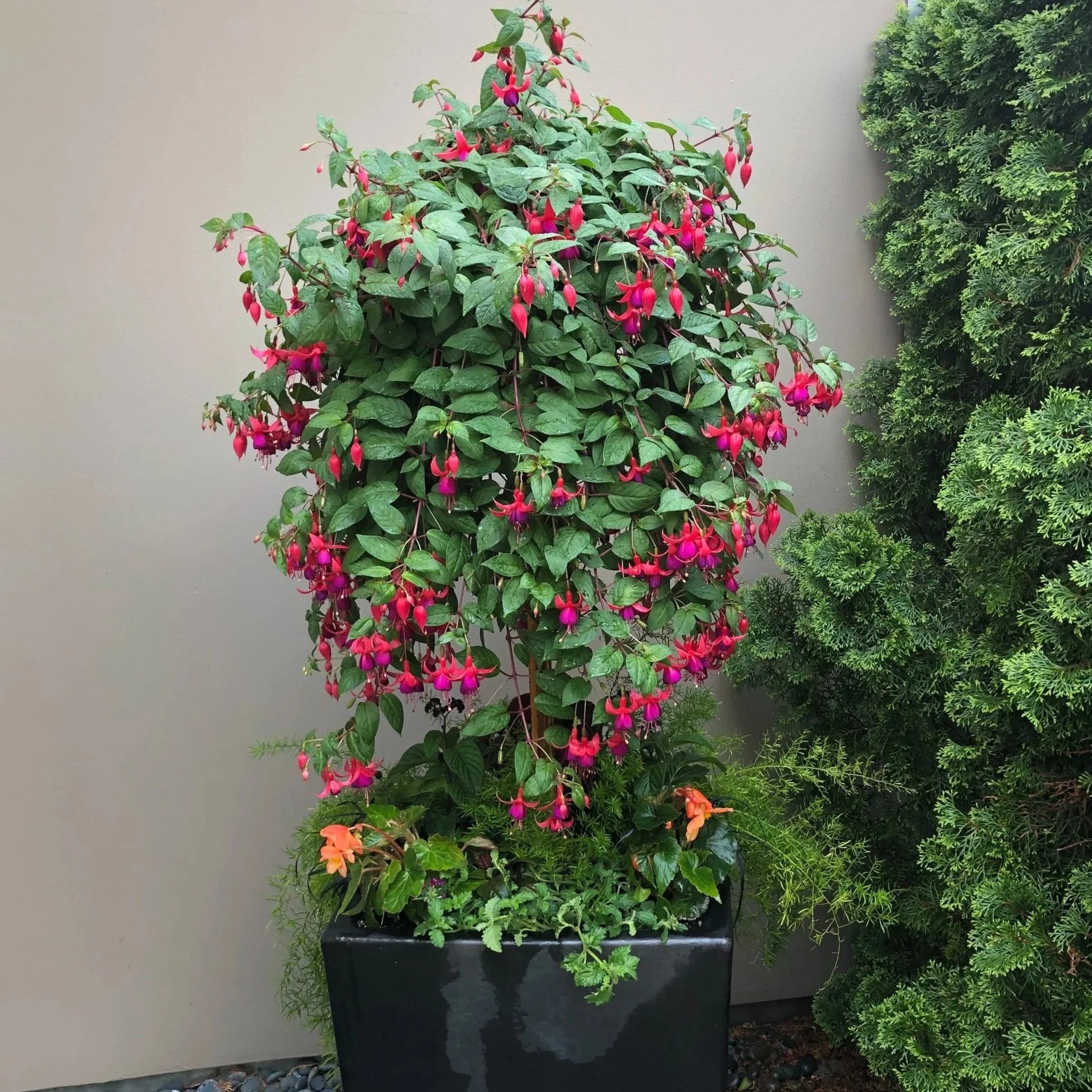
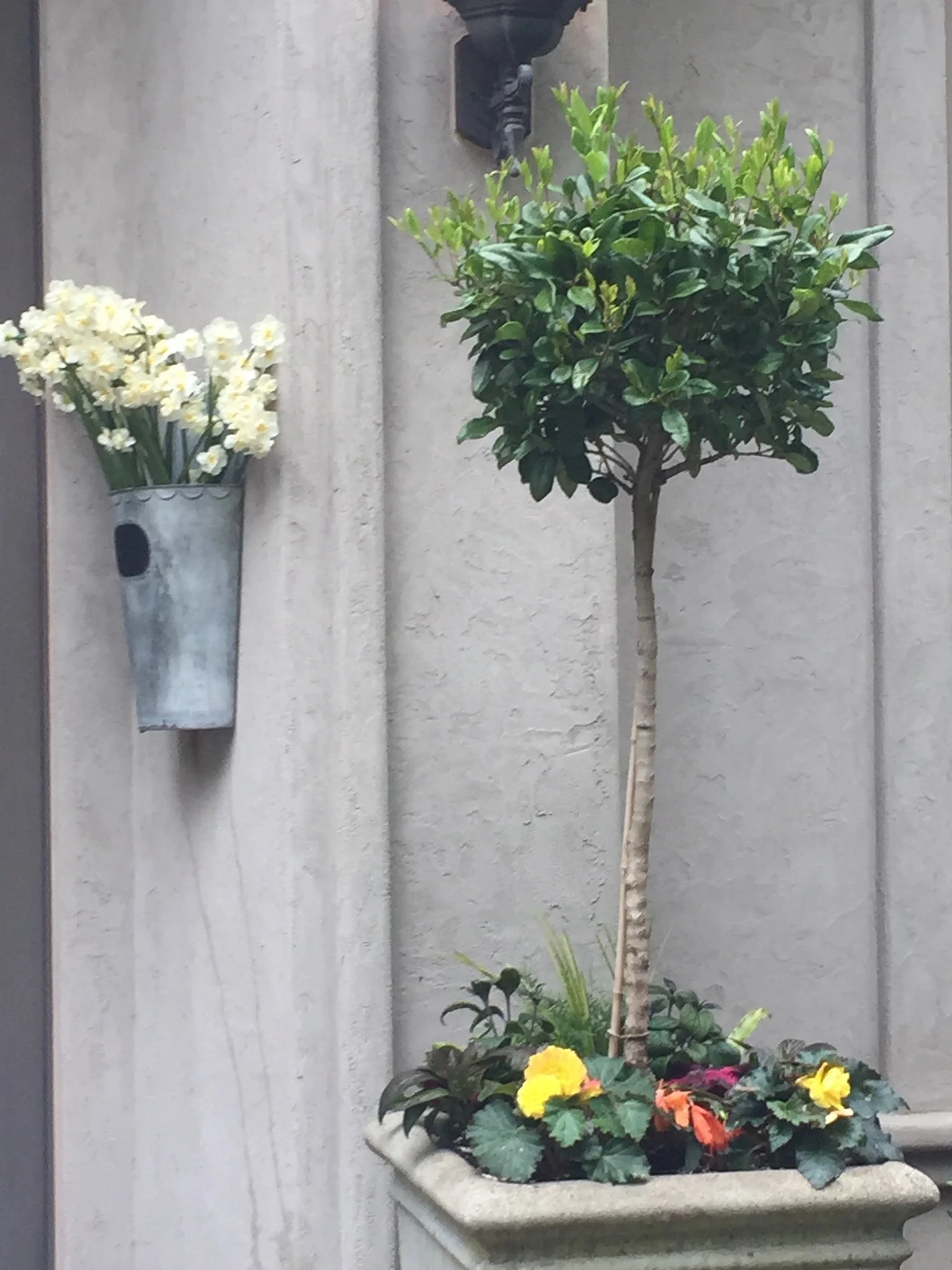
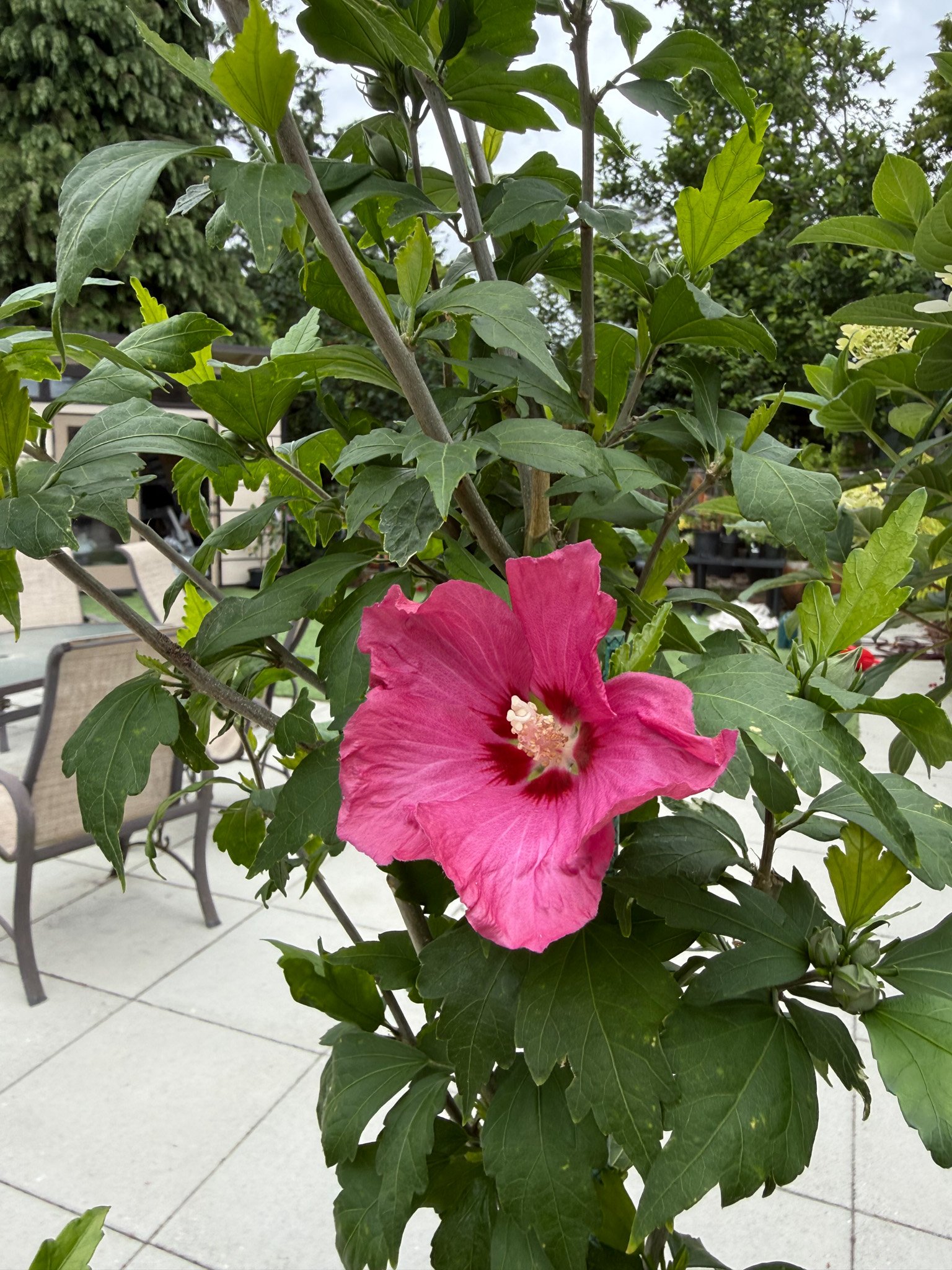
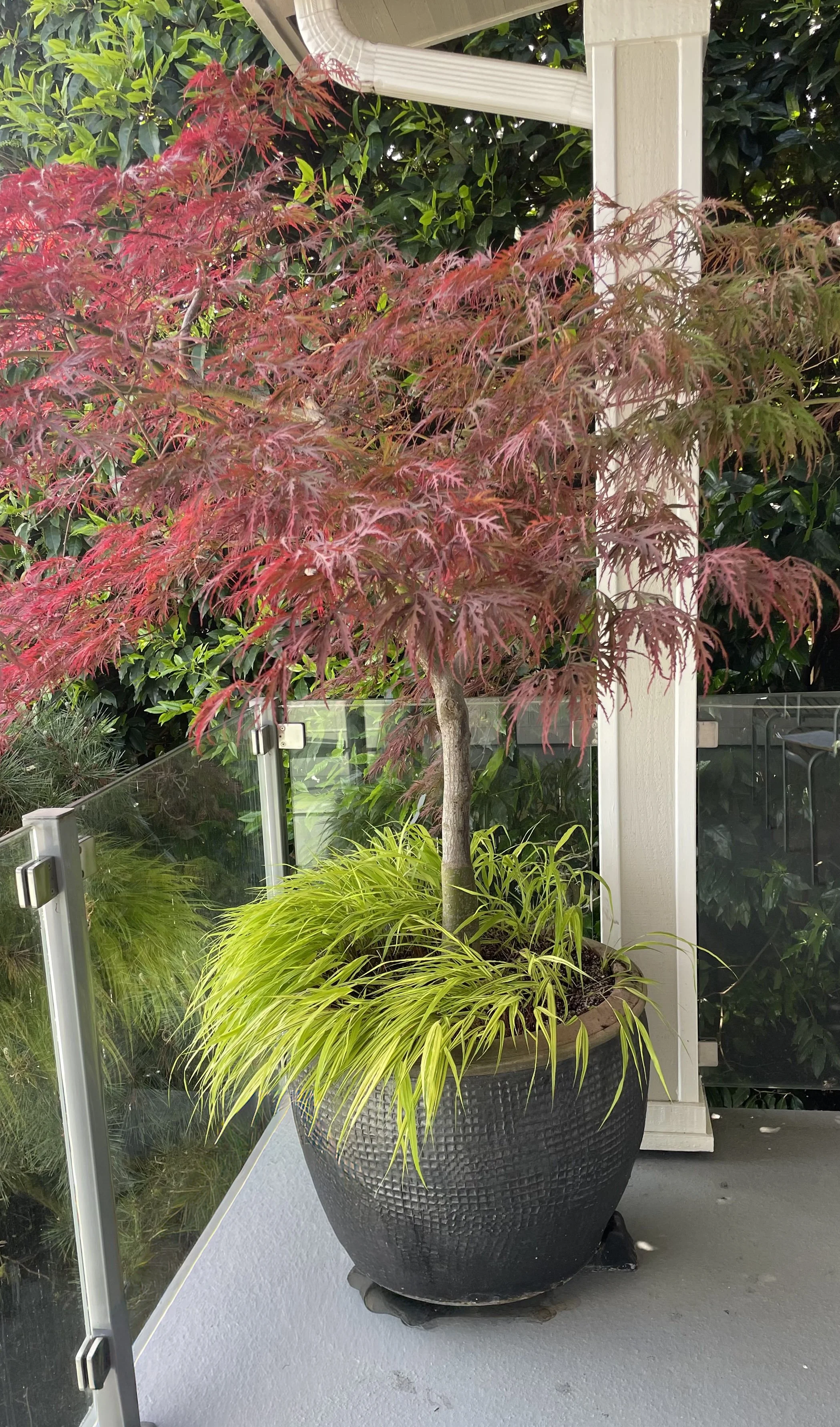
A few of my favorites:
Dwarf citrus, for glossy foliage, fragrant flowers and fruit
Panicle hydrangeas, trained into tree form, for generous summer bloom
Japanese maples, graceful form, beautiful foliage, and seasonal change
Hibiscus standards, for bold flowers and tropical vibes
Lilacs, standards trained into tree form, for spring flowers and fragrance
Evergreen standards, clipped topiaries and compact conifers, for year-round structure, texture and a more sculptural look.
You don’t need a huge yard to make a strong statement with any of these. Sometimes all it takes is one well-chosen patio tree in the right container
A Word on Sourcing
Sometimes one of the challenges with patio trees can be finding a good one.
A quality patio tree should have a strong trunk, a balanced canopy, a healthy root system, and a shape that fits the style you’re looking for. When shopping in person, check that the tree sits securely in its nursery pot and that the trunk and branches are not damaged.
There are times when I enjoy wandering through a nursery, hunting for just the right specimen, and times when having a hand-selected, well-shaped patio tree arrive ready to design with feels like an absolute gift.
That is one reason MyPatioTree has been such a helpful option for me. Their flowering trees are grown with horticultural knowledge and care, and the trees I have received have arrived healthy, and well-shaped with strong branching. When the structure of the tree is strong from the start, the rest of the design becomes much easier.
Set Up Your Patio Tree for Success
Beautiful design and good horticultural practices go hand in hand. A patio tree may be decorative, but it is still a living tree or shrub growing with a limited amount of soil and root space.
Choose a container with drainage holes, enough room for the root system, and enough weight or stability to support the tree from toppling in the wind.
Use a good-quality potting mix, not garden soil, and leave enough space between the soil line and the rim of the pot so you can water thoroughly without it spilling over the sides.
Pay attention to the light. Most flowering patio trees need plenty of sun to bloom well, so choose a tree that suits the exposure you actually have, not the one you wish you had. We’ve all tried sneaking a sun-lover into a shady spot at least once, and it rarely works out well for the plant or us.
Because container-grown trees have limited root space, they need consistent watering, seasonal fertilizing, occasional pruning, and, over time, root pruning or repotting. Drip irrigation also can be a smart consideration, especially for larger patio trees or client containers that need steady moisture through summer.
If you plan to leave your patio tree outdoors year-round, choose one hardy enough for container life in your area. Roots in containers are more exposed to winter temperatures than roots that are insulated in the ground, so a common guideline is to select a plant rated one to two zones colder than your garden. Local conditions, the container material and how protected the location is will also play a role.
The Beauty of One Strong Gesture
What I love most about patio trees is that they don’t ask for much room, yet they can completely change how a space feels.
One well-chosen patio tree can make an entry feel more inviting, a seating area more intimate, or a patio feel more connected to the home and garden around it. It lifts the eye, softens hard edges, and adds the kind of presence that smaller plantings can’t always manage on their own.
And depending on the tree, you might also get flowers, fruit, fragrance, shade, and a bit of privacy to boot.
That’s the real benefit of designing with patio trees. They help create the kind of outdoor spaces we actually want to spend more time in – the place for morning coffee, the spot where friends linger for a catch up, or the patio where summer dinners stretch into evening because no one is quite ready to go inside.
It’s not just about adding more plants or pots for the sake of more. It’s an intentional gesture that makes the whole space more inviting, more interesting, and more alive.
-Cindy
Note: Some of the links in this post are affiliate links, which means I may earn a commission if you make a purchase through them. I only recommend products I use and love like MyPatioTree. Thank you for supporting my small business.